
Celebrating Dr. A.T. Still’s Birthday and Honoring the Native American Influence on Osteopathy
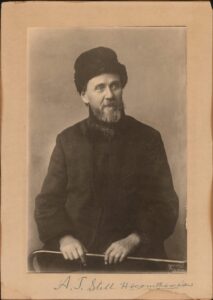
Photo Credit: Courtesy of the Museum of Osteopathic Medicine [2008.28.01]
Thank you to RVU Vice President for Inclusive Excellence, Dr. Jesús Treviño, PhD, for your guidance on the piece.
Andrew Taylor Still was born on August 6, 1828, in a log cabin in Lee County, Virginia.1 He trained as a physician under his father, and in 1892, opened the nation’s first osteopathic medicine school, establishing his legacy as the Father of Osteopathic Medicine.1
Dr. Still’s service in the Civil War and the personal tragedies he endured led him to reject the conventional medicine of his era and develop osteopathic medicine principles.1 While many influences shaped his thinking,2,3 recent research suggests that his interactions with Native American tribes may have played a meaningful role in shaping what we now know as osteopathic medicine. 2,4
In honor of Dr. Still’s birthday, Rocky Vista University (RVU) celebrates his contributions to medicine, while also acknowledging and honoring the influence that Native American practices likely had on osteopathic medicine development.
Native American Influence on Osteopathy
According to the American Association of College of Osteopathic Medicine (AACOM), osteopathic medicine focuses on a whole-person approach to care; “partnering with patients, considering the connection of body, mind, and spirit in delivering care, and recognizing the role of a physician’s hands to diagnose and treat illness or injury.”5
Native American healing traditions closely resemble these osteopathic philosophies and techniques, and recent research suggests that resemblance is no accident. 2,4
It is clear from Dr. Still’s writings that he interacted with the Shawnee tribe in Kansas in 1853.6 Researchers suggest that these experiences and his broader exposure to Native American healing practices helped shape two pillars of osteopathic medicine: the body-mind-spirit paradigm and osteopathic manipulative treatment (OMT). 2,4
A.T. Still University acknowledges this connection on its website, noting that Dr. Still’s philosophy of treating a person holistically parallels the Medicine Wheel, “a sacred symbol used by many tribal communities to represent the continuous balance of physical, emotional, mental, and spiritual health.”7 The Museum of Osteopathic Medicine has also shared that Dr. Still claimed to be a descendant of the Lumbee Tribe through his father’s bloodline.8
Native American Influences on the Body, Mind, Spirit Paradigm
According to Dr. Still’s 1897 autobiography, he moved to the Wakarusa Mission in Kansas with his wife in 1853, where he treated patients of the Shawnee tribe alongside his father.6 Dr. Still learned the Shawnee language,6 and research suggests that he owned a “sacred Navajo carpet to cover his treatment table, a tool typically given by a Native American traditional healer to another one.”2,9 The Shawnee Tribe even referred to Dr. Still as “Hoconethowa,” or “healer.”7
While not every tribe shares the same traditions and healing practices, researchers have identified a holistic view of health that spans many tribal communities.2,9 Many tribes express this through the Medicine Wheel, a symbol whose quadrants represent context, body, mind, and spirit.2,10 The whole person must be in balance for health to be restored, and tribal healers would treat illness by bringing balance to these quadrants.2,10
Through these examples and others, researchers argue that Dr. Still was exposed to Native American healing practices and most likely introduced the body-mind-spirit paradigm into Western medicine,2 where it remains one of the defining principles of osteopathy today.
Native American Influences on Osteopathic Manipulative Medicine
The influence of Native American traditions on osteopathy extends beyond philosophy. A research paper published in 2023 examined the hands-on manipulative practices of the Shawnee, Pawnee, Kickapoo, Cherokee, and Potawatomi tribes and found significant similarities with American osteopathic manipulative medicine.4
The research was uniquely situated. One author received osteopathic medicine training, while another had experience treating patients using manual therapies he learned from Cherokee elders.4 By comparing their respective techniques side by side, the team identified several shared practices, including4:
- “Working to free the breath and to improve respiratory function”
- “Stretching and traction of limbs, with a focus on specific muscles”
- “Kneading and wringing of muscles”
- “Focused holding and applying compressive and expansive forces to the bones of the skull and holding/massaging the skull and the muscles of the head and neck”, and others.
While the team compared Cherokee techniques to osteopathy in their research, they argued that those techniques were likely shared with the Shawnee, Pawnee, Kickapoo, and Potawatomi tribes as well.4 The similarities suggest that the origins of OMT may run deeper than Western medical history has traditionally acknowledged.4
Ethics and Acknowledgement
Dr. Still’s methods of studying the human body were not without controversy. He acknowledged in his writings that he disturbed Native American graves and disinterred corpses to learn about the human body. 6
“In my early days in wind-swept Kansas I had devoted my attention to the study of anatomy. I became a robber in the name of science. Indian graves were desecrated and the bodies of the sleeping dead exhumed in the name of science. Yes, I grew to be one of those vultures of the scalpel, and studied the dead that the living might be benefited.”6
These acts caused real harm to Native American communities and are part of a broader history of scientific exploitation of Native peoples. Acknowledging this is an important part of telling the full story of osteopathy’s origins honestly.
How RVU Honors Native American Heritage Today
RVU is committed to honoring Native American heritage, acknowledging tribal communities’ contributions, and offering RVU students opportunities to learn about tribal medicine, traditions, and culture.
As part of RVU’s commitment to supporting Native Americans, the Department of Enrollment Management has signed memoranda of understanding with institutions that serve Native American populations. This partnership has created a pipeline program that encourages Native students to apply to RVU.
Furthermore, RVU students are completing clinical rotations with Native American tribes in South Dakota, Wyoming, Montana, and Oklahoma. RVU is also a member of IHEART (Indigenous Health, Education, and Resources Taskforce), a national organization dedicated to increasing the enrollment of Native Americans in medical schools.
Additionally, RVU is affiliated with the American Indian Medical Education Strategies Alliance (AIMES), which advocates for policy changes, funding, and lobbying at the national level to support Native American health initiatives.
Thanks to the leadership of Native American students, RVU has implemented a graduation regalia policy that allows students to express their cultural identity during graduation ceremonies.
Additional Reading
The story of Dr. Still and Native American healing traditions that helped shape osteopathy is far richer than any single article can capture. If you’d like to dig deeper, we’ve gathered a curated list of books, scholarly papers, museum archives, and reputable websites that expand on the topics covered here.
- Indigenous Roots of Osteopathy – Mehl-Madrona, L. et al., 2023 (open-access PDF)
- The Native American heritage of the body-mind-spirit paradigm in osteopathic principles and practices – Zegarra-Parodi, R. et al., 2019
- Go to the Prairie – Walker, M.D., 2014 (full-text preview)
- The A.T. Still Museum digital collection (primary letters, photographs, mission records)
- The Smithsonian’s Native American Healing Practices portal
References
- A.T. Still Biography. Museum of Osteopathic Medicine. Accessed June 24, 2026. https://www.atsu.edu/museum-of-osteopathic-medicine/museum-at-still.
- Zegarra-Parodi R, Draper-Rodi J, Haxton J, Cerritelli F. The Native American heritage of the body-mind-spirit paradigm in osteopathic principles and practices. Int J Osteopath Med. 2019;33-34:31-37. doi:10.1016/j.ijosm.2019.10.007.
- Gevitz N. A degree of difference: the origins of osteopathy and the first use of the “DO” designation. J Osteopath Med. 2014;114(1):30-40. doi:10.7556/jaoa.2014.005.
- Mehl-Madrona L, Conte JA, Mainguy B. Indigenous roots of osteopathy. AlterNative. 2023;19(4):923-932. doi:10.1177/11771801231197417.
- What Is Osteopathic Medicine? American Association of Colleges of Osteopathic Medicine. Accessed June 24, 2026. https://www.aacom.org/become-a-doctor/about-osteopathic-medicine.
- Still AT. Autobiography of Andrew T. Still. A.T. Still; 1897.
- ATSU’s American Indian Heritage. A.T. Still University. Accessed June 24, 2026. https://www.atsu.edu/diversity/national-center-for-american-indian-health-professions.
- Dr. Still’s Heritage Reflects American Indian Ties. Museum of Osteopathic Medicine. Accessed June 24, 2026. https://www.atsu.edu/museum-of-osteopathic-medicine/dr-stills-heritage-reflects-american-indian-ties.
- Nauman E. Native American medicine and cardiovascular disease. Cardiol Rev. 2007;15(1):35-41. doi:10.1097/01.crd.0000197977.68113.32.
- Rountree, J. Strength-based well-being indicators for Indigenous children and families: A literature review of Indigenous communities’ identified well-being indicators. Am Indian Alsk Native Ment Health Res. 2016;23:206-220. doi:10.5820/aian.2303.2016.206.