

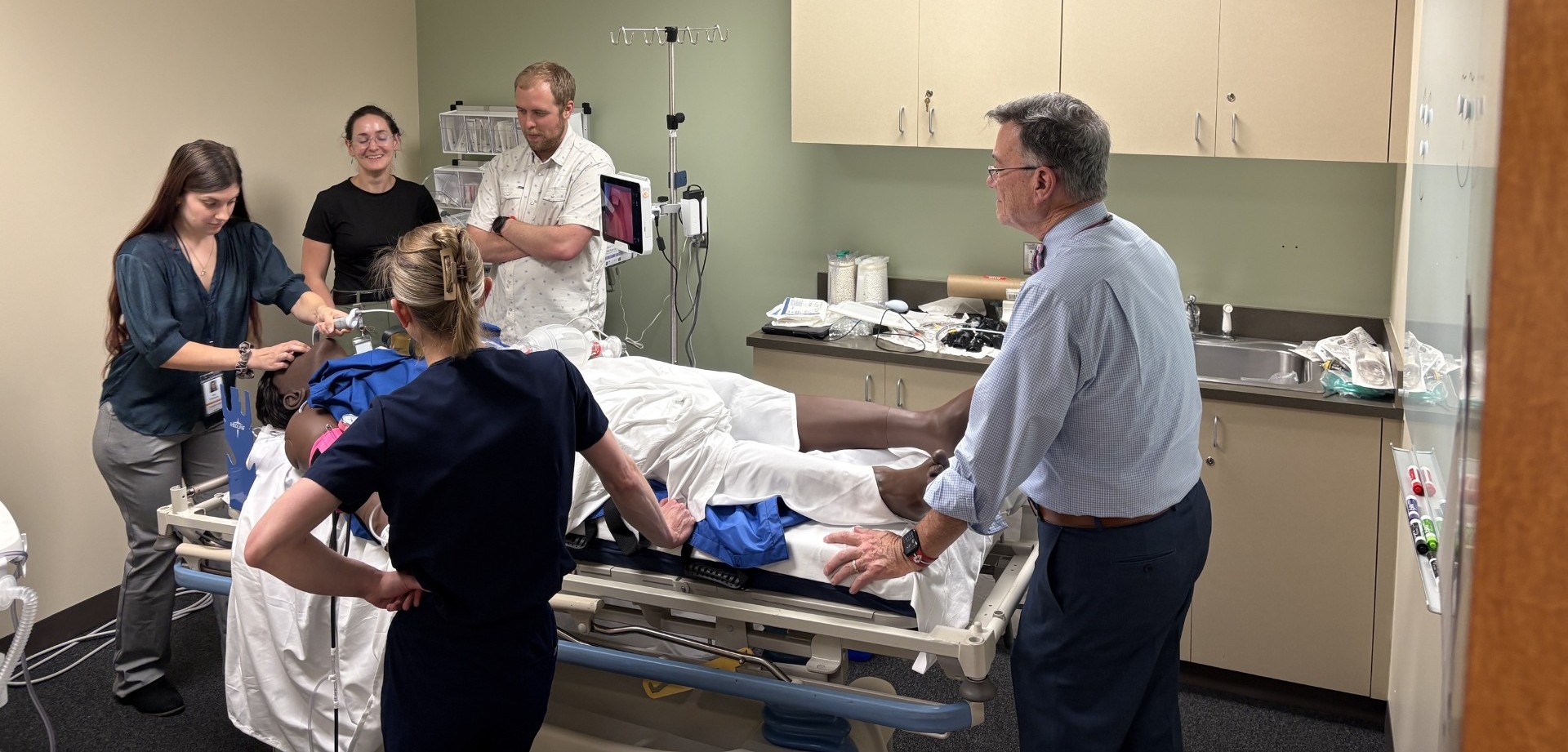
How RVU’s DNAP Program Prioritizes Simulations From Week One
When a second-year student in Rocky Vista University’s (RVU) Doctor of Nurse Anesthesia Practice (DNAP) program stopped by to visit faculty recently, he had good news; staff at his clinical site had already complimented his intubation technique, and he’d only just started the clinical rotation portion of his anesthesia training.
Dr. Samuel Philips, DNAP, MBA, CRNA, and Assistant Professor at RVU, wasn’t surprised by this feedback; that is what RVU’s DNAP curriculum is set up to do after all. “We want to essentially get them up to speed and almost over-prepared for when they step foot into an OR,” said Dr. Philips when asked about RVU’s DNAP students’ time in simulations.
Students in RVU’s DNAP program are in simulations from their very first week and continue each week until they go off to clinical sites.
Why Simulation Starts on Day One
Rocky Vista University’s (RVU) Doctor of Nurse Anesthesia Practice (DNAP) program operates on what Dr. Philips describes as a front-loaded, residency-based model. Students spend their first year on campus in coursework and simulation. Then, for the final 24 months, they’re placed at a single clinical partner site; embedded in one hospital system, learning every anesthetic that site has to offer.
That structure shapes everything about how the simulation curriculum is built.
For most DNAP programs, Dr. Philips notes, hands-on exposure happens alongside clinical rotations. At RVU, it happens first. “Since we’re a front-loaded program, we want to give them as much exposure to intubation, central line insertion, regional, neuraxial, OR emergencies — all these different aspects of what goes into being an anesthesia provider,” Dr. Philips says.
What a Year of Simulation Builds
The sequence starts with something students have been working toward for years.
In the first weeks of the program, students learn intubation technique as a practiced skill, not just a concept. Dr. Philips describes it as meeting students where they are: “This is something that they’ve kind of dreamed about.”
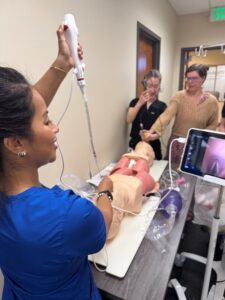
For Haylea Bordeaux, a first-year student in the DNAP program, that early hands-on experience is exactly what it was designed to do. “Seeing a glimpse of what we will be doing after graduation early on increased motivation and resilience through the remainder of the semester,” she says. “It helps keep the focus on the big picture.”
From there, the curriculum builds through the fundamentals: mask ventilation, airway adjuncts (the OPA, NPA, and LMA), difficult airway algorithms, and what goes into preparing an OR room for any emergency.
As the year progresses, the scenarios become more complex. Students move into case-based simulations covering inductions, OR emergencies, and clinical decision-making. The high-fidelity mannequins they work with can blink, stop breathing, and show live vitals on a monitor.
A Safe Place to Grow
By the end of the year, students are working on more advanced skills: central line insertion, spinal placement for C-sections, labor epidurals, and regional anesthesia techniques. Ultrasound runs throughout the entire year, used for everything from assessing whether a patient can safely receive anesthesia to guiding regional nerve blocks and vascular access. “We want to make sure that all of our students are comfortable and confident using an ultrasound across all those different domains before they start actually working on real patients,” Dr. Philips says.
Bordeaux admitted the ultrasound simulations pushed her out of her comfort zone, but the discomfort was short-lived thanks to support from the DNAP faculty. “Our instructors are truly here to teach us and support us,” said Bordeaux. “[T]hey have given us a safe place to learn, grow, be uncomfortable, and ask every question, even if it feels silly to us. Knowing that also helps us not be afraid to make mistakes or be wrong about an answer—we learn a lot from each other’s actions, answers, and thought processes.”
Set Up For Success
Students also practice head-to-toe patient assessments on standardized patients, real people who come in as part of the Health Assessment course, before they step into a clinical setting.
For Monica Diaz, a second-year DNAP student now in her clinical year at Denver Health Medical Center, the SIM lab’s value became clear once she was in an actual OR. “Intubating a dummy is very different from intubating a human,” she says. “But the repeated practice, and even the testing, where we were timed and had to accomplish certain things, I think that was really helpful because you feel pressure in that setting.” The simulation exposure meant that when she got to the OR, it wasn’t the first time her hands had been on the equipment. “My first few intubations were successful, and I think that’s because I had prior experience in the SIM lab and knew how to handle things.”
A Community That Shows Up
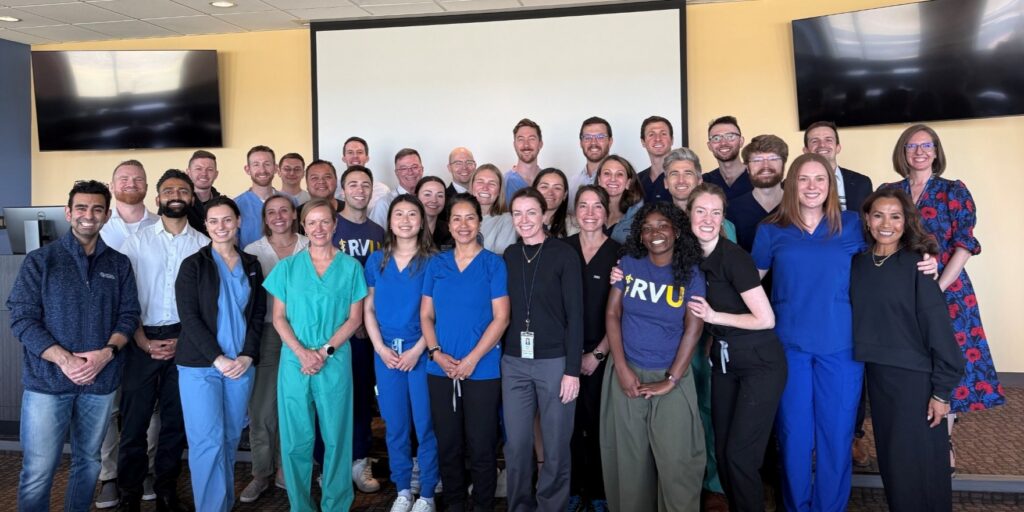
RVU’s DNAP faculty are all current, practicing CRNAs. And the professional community that shows up for students extends beyond them.
When a simulation session requires more hands than faculty can provide, RVU reaches out to its network. CRNAs from Denver Health Medical Center, Swedish Medical Center, Rose Medical Center, and other hospitals across the Denver metro area volunteer their time to co-teach. They come in for a few hours and pass along the same knowledge and experience they use every day in the OR.
“It’s not just your faculty members that you’re seeing every day,” Dr. Phillips says. “It’s people that you’re probably going to see in just a couple of months” at a clinical site.
Placed, Not Just Matched
Under RVU’s residency-based model, clinical partners are active participants in selecting students. Sites are involved in interviews and have real input into who comes to their hospital. “The student essentially knows that it wasn’t just Rocky Vista University that accepted them,” Dr. Philips says. “It was the clinical site that accepted them and wants them to succeed.”
That investment shows up before students ever set foot in an OR.
Monica first met Denver Health clinical coordinator Jen Herrenberg at the DNAP program’s clinical coordinator conference. When Monica was matched with Denver Health for her clinical rotations, Jen was there to help make the transition smooth. Before rotations even started, she reached out to invite Diaz in early to get her badge, tour the hospital, and find her locker. Denver Health also connected Monica and her classmates with second- and third-year students already working at the site.
“The first day wasn’t as scary because I had already been there,” Monica says. “They put us in contact with the second-year SRNAs who had already been there for six to eight months. I still talk to them — I ask them questions when I’m writing my care plans or when I’m working with a new preceptor I haven’t met. That has really helped me feel like I have a connection there.”
Learn More
Visit the RVU Doctor of Nurse Anesthesia Practice program page to learn more about our curriculum, admissions requirements, and mission.