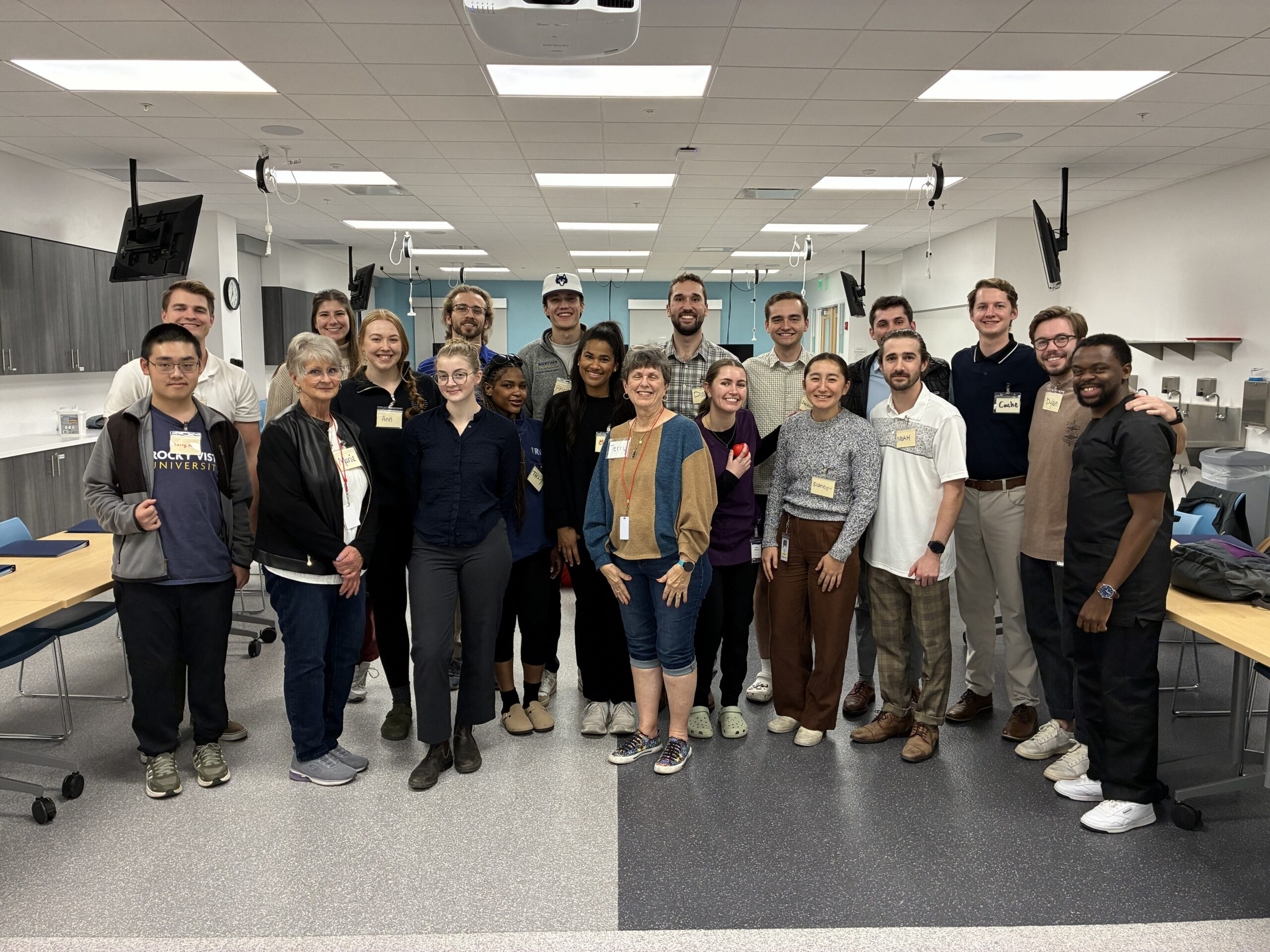
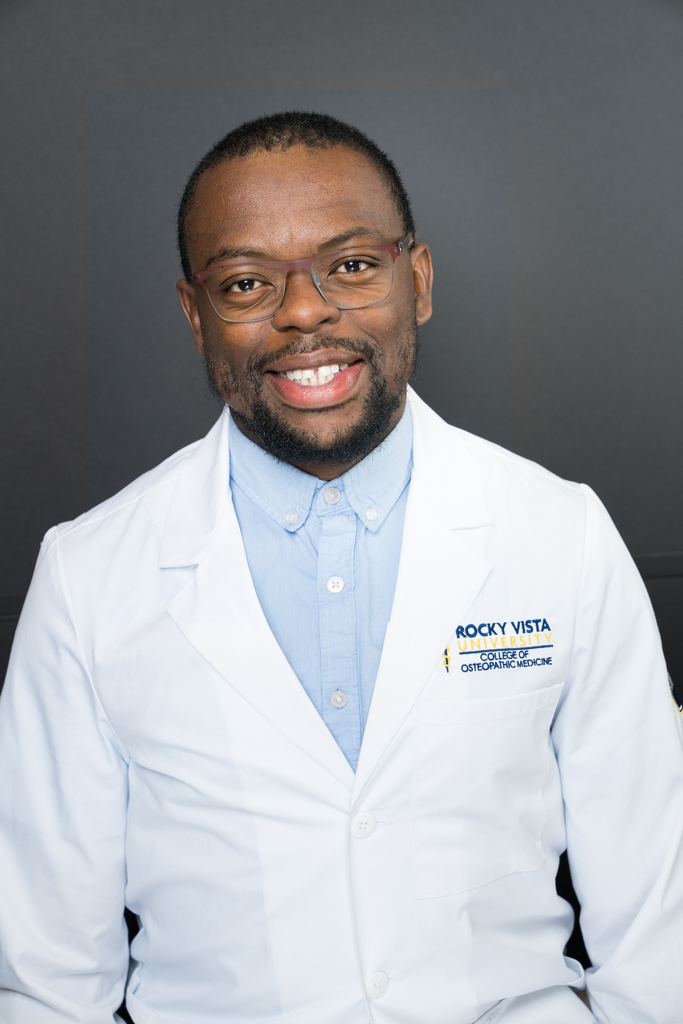
Falls can have life-changing consequences for older adults, affecting not only mobility and independence but also confidence, social engagement, and quality of life. In Ivins, Utah, a community with a substantial population of older adults, our team of Rocky Vista University College of Osteopathic Medicine (RVUCOM) students addressed this challenge in an innovative way.
We developed a pilot study to examine whether immersive virtual reality training, combined with home exercises and medical student mentorship, could help reduce fall risk and fear of falling among older adults. The project also explored another important question: Could an intergenerational program improve social connection among older adults while helping medical students become more comfortable and skilled in geriatric care?
The Study
Developing the pilot required nearly a year of preparation. We designed the research protocol, established community and technology partnerships, secured Institutional Review Board approval, recruited and trained student volunteers, and obtained funding from both RVU and the American Osteopathic Foundation.
The study brought together older adults from the Ivins community and 15 medical student volunteers. Eleven participants between the ages of 60 and 85 completed the study.
Each participant was paired with a medical student mentor who supported them throughout the six-week program. This one-to-one model allowed students to build meaningful relationships with participants while gaining practical experience communicating with and caring for older adults.
Participants completed weekly sessions using the UpRightVR SafetyNet™ platform. With safety precautions and close student supervision, participants performed balance activities on firm and foam surfaces while responding to immersive visual environments.
The exercises challenged several abilities involved in maintaining balance and preventing falls, including weight shifting, functional reaching, stepping, visual motion tolerance, hand and eye coordination, memory, and head and eye movements. Activities were adapted according to each participant’s abilities and progression.
We supplemented the virtual reality sessions with home exercises and encouraged participants to complete them two to three times each week. Student mentors checked in with participants and helped them work toward their individual goals.
The technology made the activities engaging, but the relationships were just as important. Participants were not simply completing exercises. They had a student who knew them, encouraged them, and looked forward to seeing them each week.
Participants completed standardized assessments before and after the six-week intervention, including the Berg Balance Scale, Fall Risk Assessment Tool, Timed Up and Go test, Activities Specific Balance Confidence Scale, and UCLA Loneliness Scale. Exit interviews explored their experiences and social connections.
Because this was an initial study with a small number of participants, the findings offer an encouraging foundation for future research. Many participants also began with relatively high balance scores, leaving limited room for improvement. Average Berg Balance Scale scores increased from 52.9 to 54.5, representing a moderate effect size. Fall Risk Assessment Tool scores decreased slightly from 8.0 to 7.6, while balance confidence remained high.
Participants described the virtual reality system as safe, engaging, and comfortable, with minimal discomfort. They reported perceived improvements in balance and confidence and valued the relationships they developed with medical students.
Overall, the study demonstrated that a medical student led, virtual reality supported program was feasible and well accepted by older adults. It also provided valuable guidance on recruitment, assessment selection, intervention length, home exercise participation, and program delivery for a larger study.
Taking the Next Step
Building on what we learned, the team and I are working toward an expanded study involving a larger and more diverse group of older adults. The proposed next phase would compare three approaches: osteopathic manipulative medicine combined with virtual reality and home exercise, virtual reality combined with home exercise, and home exercise alone.
We hope this comparison will help determine whether combining osteopathic manipulative medicine with immersive balance training provides benefits for mobility, balance, confidence, and fall risk reduction.
We hope this research contributes to the development of practical and engaging fall prevention strategies that improve both physical and psychosocial outcomes in older adults. We also want to demonstrate that intergenerational experiential learning can strengthen geriatric education and better prepare medical students to care for an aging population.
The Team
The project wouldn’t have been a success without the help of community partners and RVU students and faculty. The research team includes Emma Bergen, OMS-III; Kenneth Forest, OMS-III; Nathaniel Hiss, OMS-III; and Angela Hamilton, OMS-III. Additional student volunteers supported participant mentorship, study sessions, assessments, and program logistics. Faculty mentors ensured participant safety and aided in the study’s development and included Vice Provost for the Office of Research and Scholarly Activity, Amanda Brooks, PhD; RVUCOM-UT Assistant Professor of Family Medicine Thomas Bigham, DO, MA; and RVUCOM-UT Professor of Osteopathic Principles and Practice Leena Guptha, DO, PhD, MBA, MS.
Sharing the Research on a National Stage
I presented the project at the Conference on Osteopathic Research and Knowledge in San Diego, California on Sept. 9-12. The conference brings together medical students, physicians, researchers, and educators to share research that advances osteopathic medicine and patient care.
Presenting this work nationally moved the project beyond our local community, and I received feedback from people committed to advancing osteopathic research. It was especially meaningful to demonstrate that medical students can identify a community need, build partnerships, and develop a program that creates value for both older adults and future physicians.
The presentation allowed me to represent the older adults, students, faculty mentors, and community partners who made the project possible.
Why Research Matters
I am especially drawn to system building, which involves developing solutions that address common problems at scale rather than focusing on only one patient at a time. Research allows us to study those solutions carefully, learn from the people they are intended to serve, and continually improve them.
The project also taught us about research design, grant funding, teamwork, networking, community engagement, and the many operational steps required to transform an idea into a functioning study.
Just as importantly, it gave us time to know the participants as people. Conversations during study sessions and scheduled lunches helped bridge generational differences and reinforced the importance of listening, empathy, and human connection in medicine.
We began with the goal of studying fall prevention, but we learned much more than that. We learned how valuable it is to slow down, listen to older adults, and build genuine relationships with the people we serve. Those lessons will help make us better physicians.
Research Opportunities for RVU Students
Student research and scholarly activity are a vital part of the hands-on, real-world medical education experience that RVU emphasizes in our culture and curricula. Read about other students’ research projects on the Peak News & Stories page on the RVU website.
Learn more about what research opportunities are available at RVU by checking out our Office of Research and Scholarly Activity.