

RVU-MCOM Military Medicine Track – The Impact of War Days
Student Doctor Elaina Goulet assessed her last patient during a recent wartime simulation held at Fort Harrison in Helena, Montana. The soldier presented with a simulated head trauma and intracranial bleeding and was deteriorating quickly. While she tried every medical intervention possible with the limited resources she had, she ultimately made the decision that the patient couldn’t be saved.
For Goulet, her role as a military medicine physician during the simulation was more than just learning about how to treat patients with combat wounds in high-stress environments.
It was an emotional lesson in how important military medicine is and an experience that reinforced the harsh reality that not every soldier can be saved during wartime combat.
The Rocky Vista University Montana College of Osteopathic Medicine (RVU-MCOM) Military Medicine Track teaches osteopathic medicine students during their pre-clinical first and second years of medical school the skills they’ll need as future military doctors. The curriculum exposes students to clinical scenarios they could potentially face in wartime combat and other disasters.
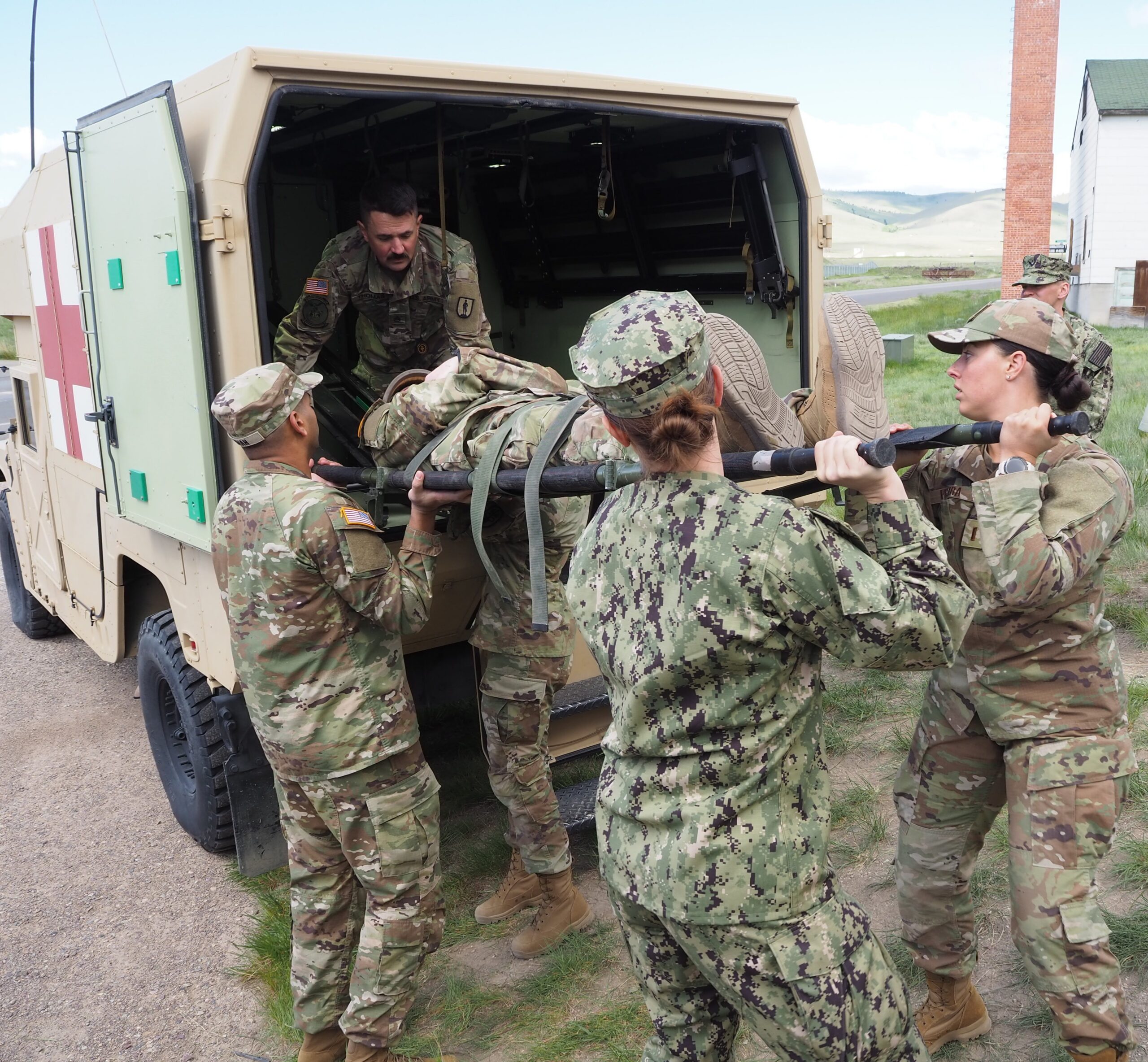
Goulet participated in the War Days capstone, a multi-day battlefield simulation that concludes the track. Students receive the valuable experience of working with Montana National Guard medics and treating patients with simulated combat injuries at Fort Harrison in Helena, Montana. It’s an opportunity to prepare them for wartime in the future, said Director of the RVU-MCOM Military Medicine Track, Jamie Riesberg, MD.
“It’s their chance to demonstrate what they’ve learned during their two years in the Military Medicine Track,” Dr. Riesberg said.
Goulet is completing her second year at RVU-MCOM and is a United States Army second lieutenant. She received the Health Professions Scholarship Program (HPSP) scholarship offered through the military, which covers educational costs in return for a service commitment. She was grateful to have participated in the simulation, as it was a valuable reminder of the importance of quality medical training and preparing for the possibility of treating soldiers in wartime.
“It really increased my passion for wanting to learn as much as I can in order to do as much as I can when I’m out there,” Goulet said.
Preparing Future Military Physicians
The Military Medicine Track is one of the tracks available to students at RVU-MCOM. Tracks are programs offered through the school’s Department of Tracks & Electives and are for those who wish to enhance their medical knowledge outside of the core osteopathic medicine curriculum.
The RVU-MCOM Military Medicine Track prepares students for a variety of clinical scenarios and disasters and includes valuable training like Tactical Combat Casualty Care (TCCC) and Care Under Fire (CUF). They ready themselves for military medicine residencies and military lifestyle integration, learning about military rank and basic military etiquette so they can become confident military officers. With this training, students have an advantage when they start their military residency audition rotations, or interviews where students “audition” for a residency position.
Non-military, or civilian, medical students can also join the track and partake in the valuable training.
A Commitment to Military Medicine Excellence
The first iteration of the War Days capstone took place in 2025, when the inaugural class at RVU-MCOM completed their second year of medical school. The capstone was born out of the collaboration between RVU-MCOM and its sister program, Rocky Vista University College of Osteopathic Medicine (RVUCOM).
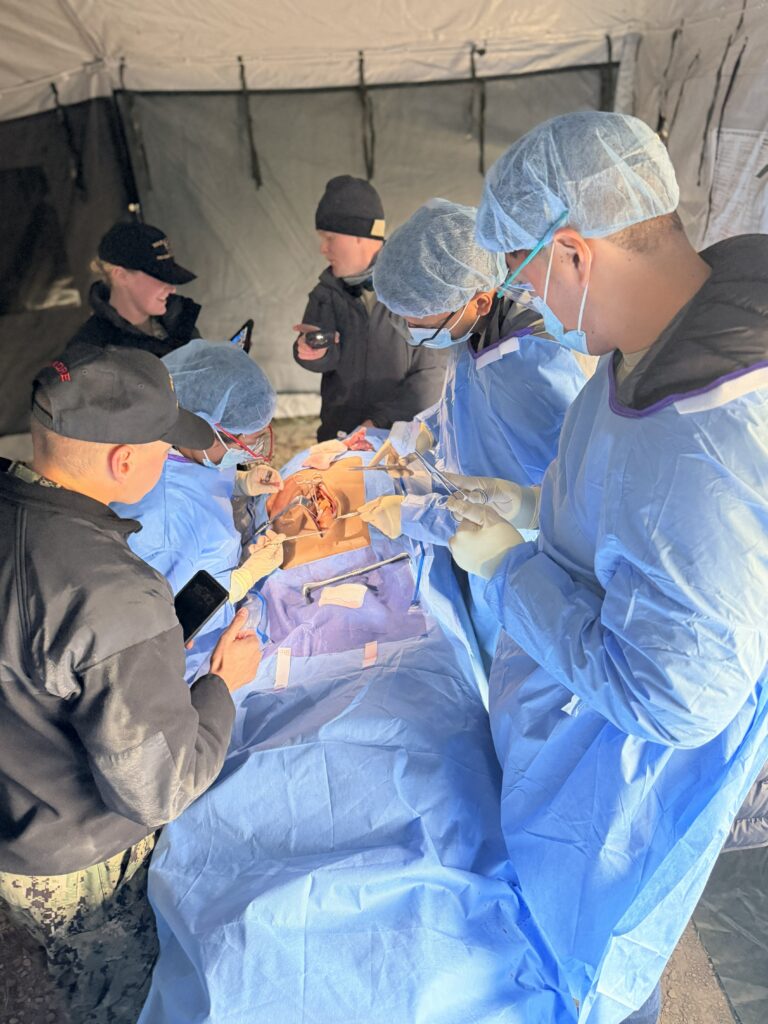
RVUCOM holds a national reputation in military medicine, with its 12 years of offering the Intensive Surgical & Trauma Skills Course, or “Cut Suit Week®.” The six-day course exposes students to battlefield and mass casualty scenarios that focus on surgical and emergency medical interventions. The 2026 Cut Suit Week ®, held in early May, involved 150 students, faculty, staff, and other professionals, and offered a total of 198 hyper-realistic® training scenarios and 50 patient surgeries. Two third-year RVU-MCOM students also participated, highlighting the meaningful partnership and collaboration between the two programs.
“We’re standing on the shoulders of giants,” Dr. Riesberg said. “RVUCOM has excelled and built a reputation in the medical school community.”
The 2026 War Days capstone occurred May 13–May 17 and is hosted by the Montana National Guard at Fort Harrison, a valuable partnership that provides an immersive training opportunity for both RVU-MCOM students and combat medics. Montana National Guard medics underwent their own medical training during the capstone, treating and triaging simulated patients in the field. Medics would then transport patients to the simulated hospital via ambulance, where RVU students provided patients with more advanced medical care in an austere environment. They navigated limited resources and supplies, like medications and blood banks, and performed surgical procedures in a field operating room. The training allowed students to partake in a variety of experiences, including treating patients as military physicians in the hospital, accompanying medics in the field, and playing the role of a soldier injured in combat. They treated patients while in a moving van, simulating medical care in moving vehicles or helicopters.
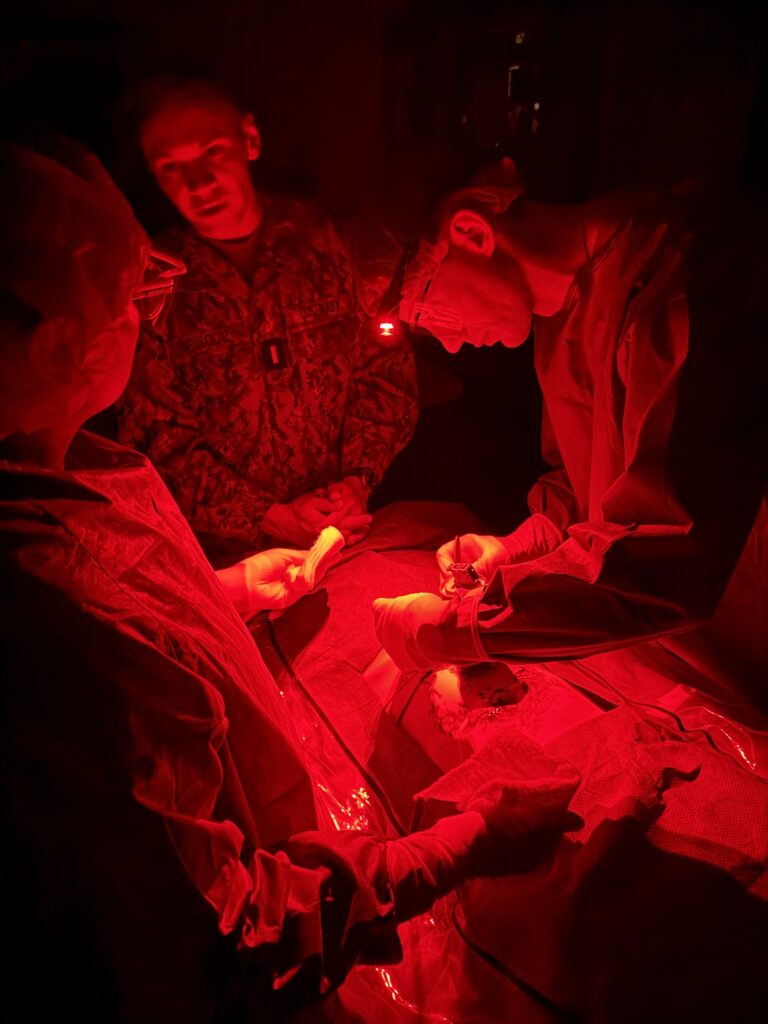
For a more immersive challenge, medical teams navigated patient care during a 24-hour, non-stop simulation, during which students juggled patient care, sleep, and breaks. Teams also performed care with red-light head lamps during a simulated drone strike, requiring a hospital-wide blackout.
The 2025 capstone was such a formative experience, that five third-year RVU-MCOM students returned to War Days this year to participate as members of the Student Cadre. The role allowed them to serve in a leadership capacity, giving them the opportunity to conduct various simulated scenarios and provide students with live updates on patients’ simulated conditions as they were being treated.
Making an Impact on Students
Third-year RVU-MCOM student and United States Navy Ensign, Emma Moore, jumped at the opportunity of participating in the Student Cadre. After her training in War Days last year, she wanted to make the experience just as meaningful for other students as it was for her. As she entered her third year of medical school and began clinical rotations in Arizona, she credits the track and capstone in helping refine her skills and prepare her for real-life patients.
While in clinical settings, Moore noticed that she was more confident in her skills compared to students from other medical schools she worked alongside. She didn’t shy away from getting to know her patients and worked collaboratively with her preceptors.
“When I did my report outs to my preceptors, I did it confidently because I had asked the right questions, I knew it was important, and I cared about that patient’s outcome,” she said.
For Moore, attending RVU-MCOM was the right choice as she follows the path toward a military medicine career. Being an HPSP scholarship recipient, she is committed to pursuing a career as a military physician focusing on surgical and procedural medicine.
Moore was accepted into RVU and four other medical schools, including one in her home state of South Carolina. During her initial visit to the Montana campus, she learned about RVUCOM’s Military Medicina Program, its national reputation, and its plans to collaborate with RVU-MCOM to stand up its own Military Medicine Track. RVU’s commitment to military medicine, coupled with Moore pursuing the HPSP scholarship, solidified her decision to attend RVU-MCOM.
Reflecting on her decision to attend RVU, she expressed immense gratitude, highlighting that RVU’s faculty and support prepared her for a future in military medicine.
“I just can’t imagine going anywhere else,” Moore said.
When second-year RVU-MCOM student, Samuel Cuentas, started his medical school journey, he was curious about the Military Medicine Track. While he had no intention of joining the military, he saw the value in the track’s training as he planned to pursue a career in emergency medicine.
Cuentas joined the track and fell in love with the military training and the culture of respect, honor, collaboration, and passion that the RVU-MCOM Military Medicine Track faculty created. His experience at RVU was a major factor in his decision to join the United States Air Force as a second lieutenant.
During War Days simulations, Cuentas treated patients and participated as an injured soldier in the field where he was cared for by combat medics. This role was especially meaningful to him, as it was a stark reminder of when his brother survived an IED explosion in 2011 during a deployment to Afghanistan. This real-life example, along with his experience at War Days, resulted in an unwavering confidence in his choice of joining the military.
“The Military Medicine Track and War Days gave me a firsthand look at the character, teamwork, sacrifice, expertise, and quiet professionalism that define military medicine,” Cuentas said. “Those experiences at RVU-MCOM played a major role in my decision to join the Air Force and confirmed that serving my country through both medicine and military service is the path I am called to.”
RVU’s Commitment to Military Medicine
The RVU-MCOM Military Medicine Track and the RVUCOM Military Medicine Program work collaboratively to offer students unique training experiences and mentorship opportunities to prepare them for clinical rotations and military match into residency. Learn more about RVU Military Medicine on our website and how to apply to RVU on our admissions page.