

The Heart of Anesthesia: Celebrating National CRNA Week at Rocky Vista University
The Heart of Anesthesia
January 18–24, 2026, marks National CRNA Week, a time to recognize the more than 75,000 Certified Registered Nurse Anesthetists (CRNAs) and the indispensable role they play in delivering safe, high-quality anesthesia care to patients across the United States. At Rocky Vista University (RVU), we’re proud to celebrate CRNA Week, honoring the profession and reflecting on how our Doctor of Nurse Anesthesia Practice (DNAP) program prepares future CRNAs to be the heart of anesthesia care for the patients and communities they serve.
This year’s theme, “The Heart of Anesthesia,” reflects the unique combination of clinical expertise and human connection that defines the work of CRNAs. From operating rooms and trauma settings to labor and delivery suites, CRNAs guide patients through some of their most vulnerable moments, providing not only technical precision but also reassurance, advocacy, and continuity of care.
Nowhere is this role more critical than in rural and underserved communities. In many rural areas, CRNAs deliver more than 80% of anesthesia care, ensuring access to essential surgical, obstetric, and pain-management services close to home. ¹ Their presence helps keep community hospitals open and allows patients and families to receive timely care without traveling long distances.
The Role of CRNAs in Healthcare
CRNAs spend years in intensive‑care units before entering an anesthesia program. That front‑line exposure gives them a razor‑sharp grasp of patient physiology, rapid decision-making, and crisis management—skills that translate directly to the operating room, trauma bay, and labor suite. Dr. Sam Philips, DNAP, MBA, CRNA, and Assistant Professor at RVU, emphasized that CRNAs’ critical care backgrounds prepare them to work in fast-paced, high-acuity settings where patient conditions can change quickly. He noted that experience in critical care—combined with strong clinical preparation—helps CRNAs anticipate and respond to what patients need in the operating room and beyond:
“Being a nurse who has spent a minimum of one year in critical care, they have an understanding of vasoactive medications, ever-changing patient conditions, and the skills and knowledge to anticipate and prepare for those changes. RVU takes those nurses and makes them leaders in the operating room, voices for patients who cannot speak, and providers who strive to deliver the best care. RVU faculty are all active and practicing CRNAs that are using the same skills and knowledge that are passed on to our students, who will one day be our colleagues.”
Dr. Sam Philips, DNAP, MBA, CRNA
CRNAs are vital to the anesthesia environment. Their background as ICU nurses provides a solid foundation for exceptional patient care. Their capacity to operate both independently and collaboratively is what sets them apart as the heart of anesthesia.
Beyond bedside care, CRNAs increasingly serve as researchers, educators, and policy advocates, helping shape the future of perioperative medicine. Their leadership in clinical research, professional organizations, and interprofessional education ensures that anesthesia practice continues to evolve to meet the needs of patients and communities. Assistant Program Director of RVU’s DNAP program, Dr. Jennifer Krogh, DNAP, CRNA, believes that “CRNAs are uniquely qualified to ask the critical healthcare questions and dedicate themselves to finding the answers to those questions.” While pursuing her doctorate at Yale University, she focused her research on the care of patients using methamphetamine. “I’m extraordinarily proud of my colleagues in research and innovation. Our perspective as graduate-trained nurses brings a holistic nursing view that contributes to the body of knowledge. I believe that we all bring something to the table, and if everyone has a seat at the table, we are all stronger.”
Building the Future of Nurse Anesthesia at RVU
At RVU, National CRNA Week is also an opportunity to reflect on how we are contributing to the profession’s future. RVU’s Doctor of Nurse Anesthesia Practice (DNAP) program welcomed its inaugural cohort in June 2025 and is now in its third academic semester. Although still in its early years, the program is grounded in a clear commitment to excellence, ethics, and service.
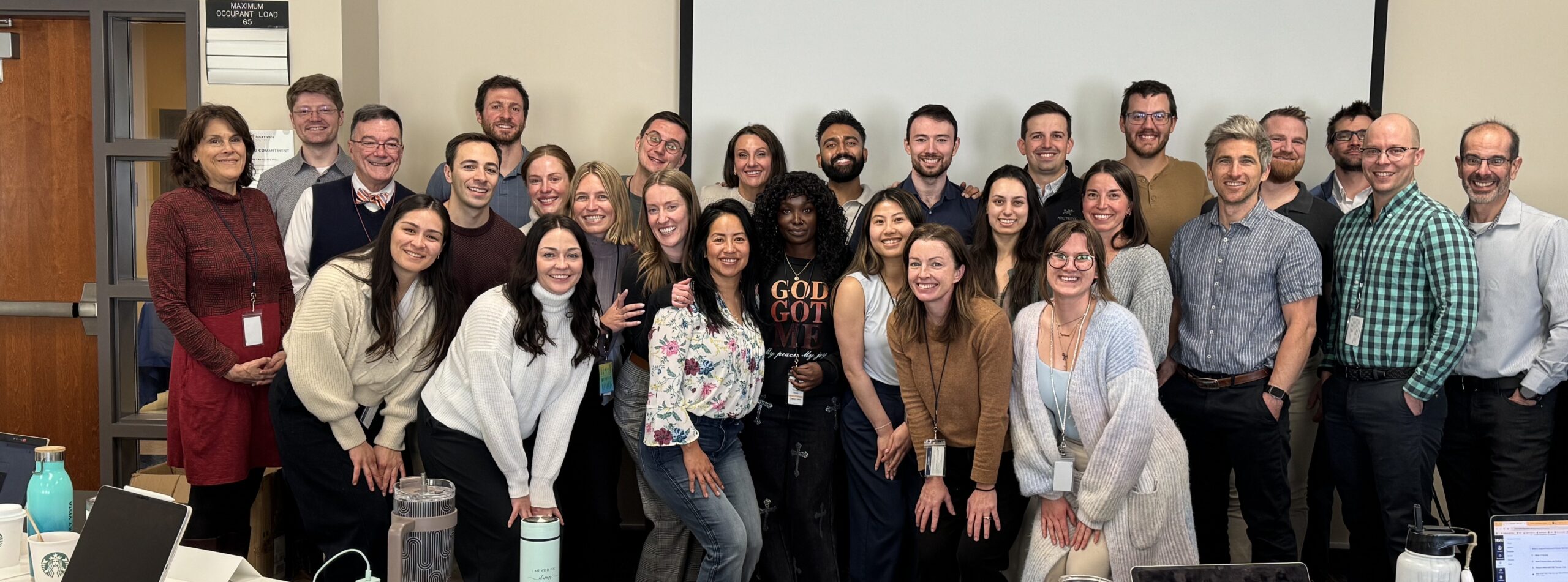
During National CRNA Week, DNAP faculty and students hosted a lunch-and-learn event, inviting colleagues from across the university to explore the evolving role of CRNAs in health care and the impact of nurse anesthesia education on patient outcomes and access to care.
Key elements of RVU’s DNAP program include:
- Mission‑Driven Learning – RVU is dedicated to developing highly skilled, compassionate, and innovative nurse anesthesia professionals through top-tier education, hands-on clinical practice, and a commitment to leadership, ongoing learning, and community service.
- Vision of Ethical Leadership – The program prepares graduates to become ethical nurse-anesthesia leaders who advance safe, high-quality care through clinical excellence, critical thinking, and lifelong learning.
- Comprehensive Resources – Students benefit from expert faculty mentorship, hands‑on clinical experiences, active‑learning curricula, and robust community‑engagement opportunities.
“The magic of CRNAs lies in the blend of critical care expertise and the nursing fundamentals that prepare us for anesthesia,” reflects DNAP I student Katie Johnson. “As a student, I’m reminded daily that while the education is extensive, the patient is the heart that drives me forward.”
Celebrating the Heart of Anesthesia
National CRNA Week is more than a celebration; it is a reminder that every anesthetic represents a partnership grounded in patient trust, clinical expertise, and compassionate care. At RVU, our DNAP students and faculty are proud to be part of that partnership, contributing to a profession that sits at the very heart of modern health care.
As one RVU DNAP student shared:
“As CRNAs, we bring years of critical care experience, but also years of experience working intimately with patients. Some of my most meaningful moments as a nurse working in critical care came when I had to manage complex physiology, multiple life-saving devices, and powerful drips, but still found a way to connect with the human being underneath it all. To me, nothing beats providing high-level care to a patient while simultaneously speaking to them or their family about hobbies, hopes, fears, sports, etc. That intersection of vigilance, critical thinking, and adrenaline, but also humanity, is what draws me to nurse anesthesia and why I believe CRNAs truly are the heart of anesthesia.”
– Madison Babb, DNAP I
At RVU, we are proud to celebrate the CRNAs who care for patients every day, the faculty who mentor future clinicians, and the students preparing to carry this profession forward. Join us in honoring CRNAs during National CRNA Week and thanking them for the expertise, compassion, and calm they bring to every patient encounter.
Follow RVU DNAP on social media and join the conversation; share a message of appreciation or a story that celebrates the impact of CRNAs as the Heart of Anesthesia.
¹ American Association of Nurse Anesthesiology. (2025b, October 8). 10 Things You Should Know About CRNAs/Nurse Anesthesiologists. Aana.com. https://www.aana.com/about-us/about-crnas/