
RVU-MCOM Student Advocates to Add Tribal Medicine to Track Offerings
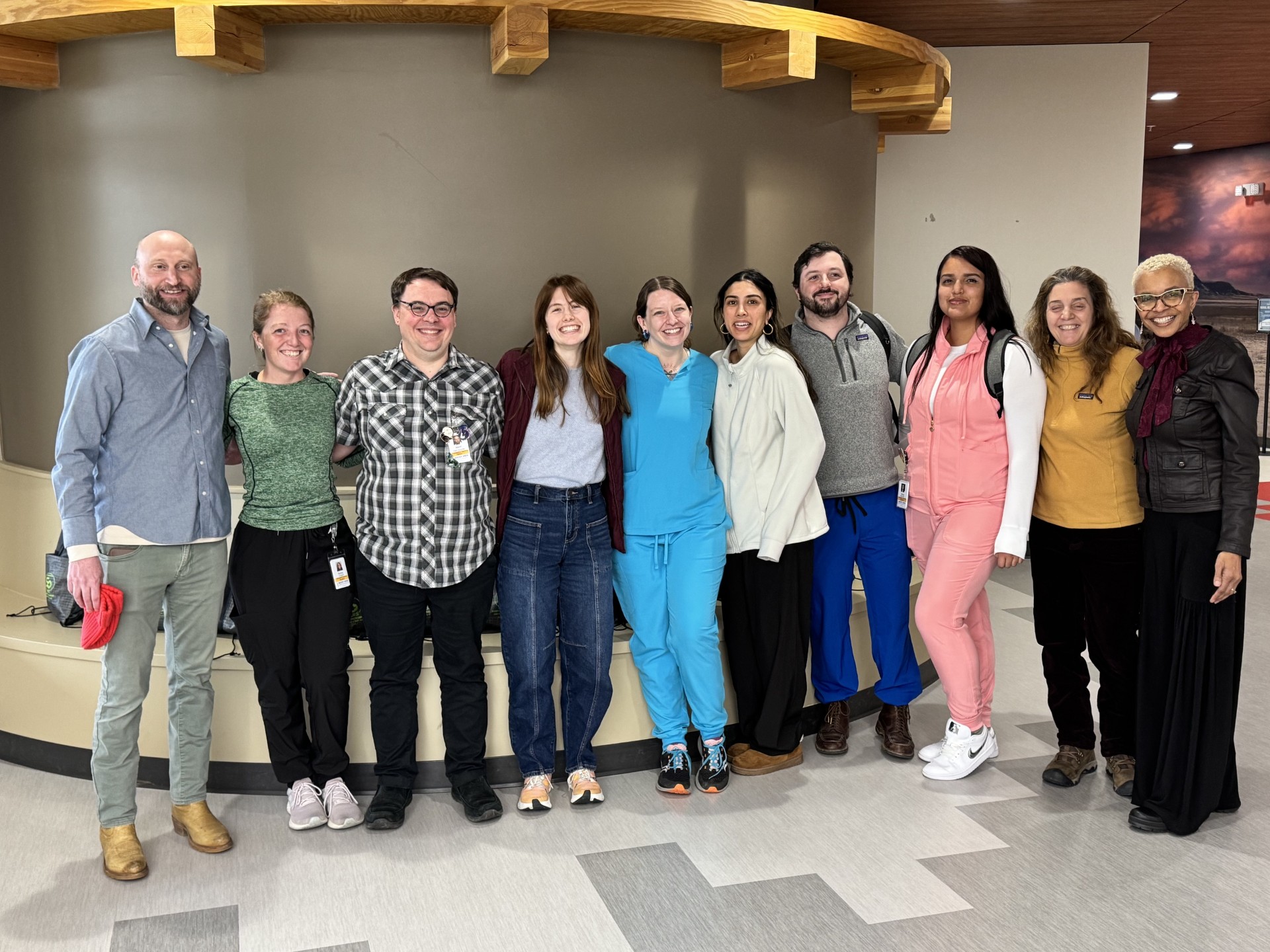
Photo Credit: Diem Jones/Institute4CommunityEvolution
Fancy Belcourt came to Rocky Vista University – Montana (RVU-MT) with the goal of not only becoming a doctor, but to make a difference.
Belcourt, an enrolled member of the Chippewa Cree Tribe, joined the Master of Medical Sciences program at RVU-MT in 2024, located four hours from her home on the Rocky Boy Native American Reservation. She later matriculated into the Rocky Vista University Montana College of Osteopathic Medicine (RVU-MCOM) in 2025 after the school opened in 2023.
Belcourt noticed a lack of representation of the tribes in Montana in the curriculum. There were few opportunities for students to learn about tribal medicine or interact with tribal communities in the state.
In Montana, there are seven Native American reservations and 12 tribes. The state even passed a law, called Indian Education for All, in 1999 requiring public school districts to teach students about the culture, history, and heritage of the tribes in Montana.
Belcourt knew she needed to make a change. To start, she advocated to display the tribes’ flags at the entrance of the school. She had bigger plans in mind, however, and got to work collaborating with faculty to develop tribal medicine elective courses at RVU-MCOM.
“Becoming a doctor, for me, is not just being a healer. It’s also being a leader; being an advocate for my people,” Belcourt said.
Getting on Track
The best way for RVU students to learn about tribal communities and their cultures is to learn from the tribes themselves, Belcourt said. After speaking with the RVU-MT Office of Tracks & Electives, she connected RVU with the Chippewa Cree Tribe and the plan to take a group of RVU students to the reservation was in motion.
Seven RVU osteopathic medicine students and three faculty members visited the reservation at the end of March to establish a strong partnership with the tribe for the tribal medicine electives.
But it’s more than just a trip, Belcourt said. The plan is to have an annual trip to the reservation and potentially partner with other tribes across Montana. The goal of the trip was for students to learn about available resources on the reservation, the tribe’s culture, and come away with a better understanding of how to treat patients with different backgrounds and cultures.
“It’s one thing to tell my classmates how life on the [reservation] was,” Belcourt said. “It’s just something that you have to see, you have to experience to fully understand.”
Tribal medicine is part of the Global, Rural, Wilderness, Underserved, Tribal Medicine (GRWUT) Track at RVU-MCOM. The school’s Office of Tracks & Electives offers GRWUT and two other tracks, which provide elective courses that enhance students’ medical knowledge outside of the core osteopathic medicine curriculum.
Its goal is to strengthen RVU’s connections with tribes in Montana and establish a growing bi-directional partnership. Students will learn how to treat patients with different backgrounds, cultures, and approaches to medicine, and explore a variety of topics that will help them become more competent and compassionate physicians. The hope is that this partnership will help establish clinical rotations in tribal communities and, eventually, offer students on the reservations a direct pathway to attending RVU, said Director of Tracks & Electives at RVU-MT, Carol Penn, DO, MA, DipABOM, DipABLM, FACOFP.
Patient-Focused
The tribal medicine electives tie directly with the osteopathic medicine philosophy of treating patients holistically, including the body, mind, and spirit, Dr. Penn said. She said that physicians who understand a patient’s background, culture, personal preferences, and social determinants of health can better treat their patients and improve their health outcomes.
Social determinants of health are “the conditions in which people are born, grow, live, work and age, and people’s access to power, money and resources” according to the World Health Organization. Dr. Penn emphasized that these can influence a person’s health outcomes and can include a person’s environment, socioeconomic status, access to food and healthcare, and other factors.
“Whether you’re going to work with a Native American population or not, this is a way for you to develop cultural fluency and to look at a community outside of your own that gives you a different perspective,” Dr. Penn said.
While faculty is still working on which tribal medicine electives will be available through the GRWUT track, Dr. Penn said that students will have a variety of options. Courses will focus on cultural competency, low resource medicine, and, specifically, tribal medicine and how other cultures approach medicine. Students have already started participating in the track, but the full curriculum will be available in 2027.
Access as a Determinant of Health
During the trip to the Rocky Boy Reservation, Belcourt wanted to emphasize to her fellow classmates what tribal members do and don’t have access to. Belcourt said that historically, the reservation has had limited access to fresh foods and healthcare, but the tribe has made improvements over time.
During the trip, students toured the Rocky Boy Health Center and learned about the comprehensive services it provides for patients, like primary care, optometry, behavioral health, dentistry, and more.
One assignment that students worked on while visiting the clinic was to come up with treatment plans for patients with specific social determinants of health. For example, if a patient is given a medication that needs refrigeration, and that patient doesn’t have a kitchen or a refrigerator, then students would need to re-evaluate and offer an alternative, Dr. Penn said.
Access to fresh food on the reservation can also be a barrier to care, Belcourt said, but the tribe has created a few programs to help address this. During the trip, students learned about the tribe’s food sovereignty and food prescription programs and their efforts to repopulate a buffalo herd on the reservation. They also built a flour mill where they make Kamut flour, which is healthier than all-purpose flour, Dr. Penn said.
Students went to one of the few nearby grocery stores on the reservation and were tasked with creating a full day menu of meals for hypothetical patients using what was available.
“This is what we want our students to be aware of so they can treat the patient within the context of the patient’s life,” Dr. Penn said.
Learning about Tribal Cultures
The electives will address a gap in RVU’s curriculum and teach students about tribal medicine, Belcourt said. The group of students were able to partake in a sweat lodge during the trip, a traditional way of healing on the reservation that uses intense heat and plants like sage and sweetgrass to help relax and detoxify the body, she said. Tribal members also use herbal remedies to treat ailments.
“It’s neat to take a step back from pharmacology and learn about tribal medicine that’s been around for years,” she said.
The group also participated in a round dance and peace pipe ceremony, learning about the traditions’ histories, spiritual meanings, and their importance.
“With RVU being a school in Montana, we’re going to work with Natives,” Belcourt said. “It’s important to learn how to work with our communities, to understand our cultural background, and just the things that we’ve gone through as a people.”
RVU Tracks & Special Programs
The tribal medicine electives are just one opportunity for students to learn about other cultures and visit other communities. RVU offers a variety of global medical outreach trips to countries like Kenya, Guatemala, the Dominican Republic, Peru, and others. Learn more about RVU’s Tracks & Special Programs on our website.