
RVU Medical Students Advocate for Osteopathic Medical Education Bipartisan Legislation
Rocky Vista University (RVU) osteopathic medicine students turned out to seek congressional support for two bills that impact osteopathic medical education during AACOM Advocacy Day on Sept. 17.
The American Association of Colleges of Osteopathic Medicine (AACOM) Advocacy Day is an annual opportunity that brings together osteopathic medicine students from across the country to advocate for legislation that prioritizes osteopathic medical education. Twenty students from RVU’s Colorado, Utah, and Montana campuses met with members of U.S. Congress in hopes of garnering cosponsors for the Fair Access In Residency (FAIR) Act and the Community Training, Education, and Access for Medical Students Act (Community TEAMS Act).
Cosponsors help bills obtain congressional committee support so that they can advance to the Senate and House floors for debate.
A Real Impact on Students
According to AACOM, DO students are not treated equally to their MD counterparts when considered for Medicare-funded residency programs. Many residency programs either do not accept DO applications or do not accept the DO exam for licensure, the Comprehensive Osteopathic Medical Licensing Examination of the United States, or COMLEX-USA. This means that DO students take the MD exam for licensure, the United States Medical Licensing Examination (USMLE), in addition to the COMLEX-USA for consideration. This results in thousands of additional dollars in fees and over 30 additional testing hours that DO students have to account for, according to AACOM.
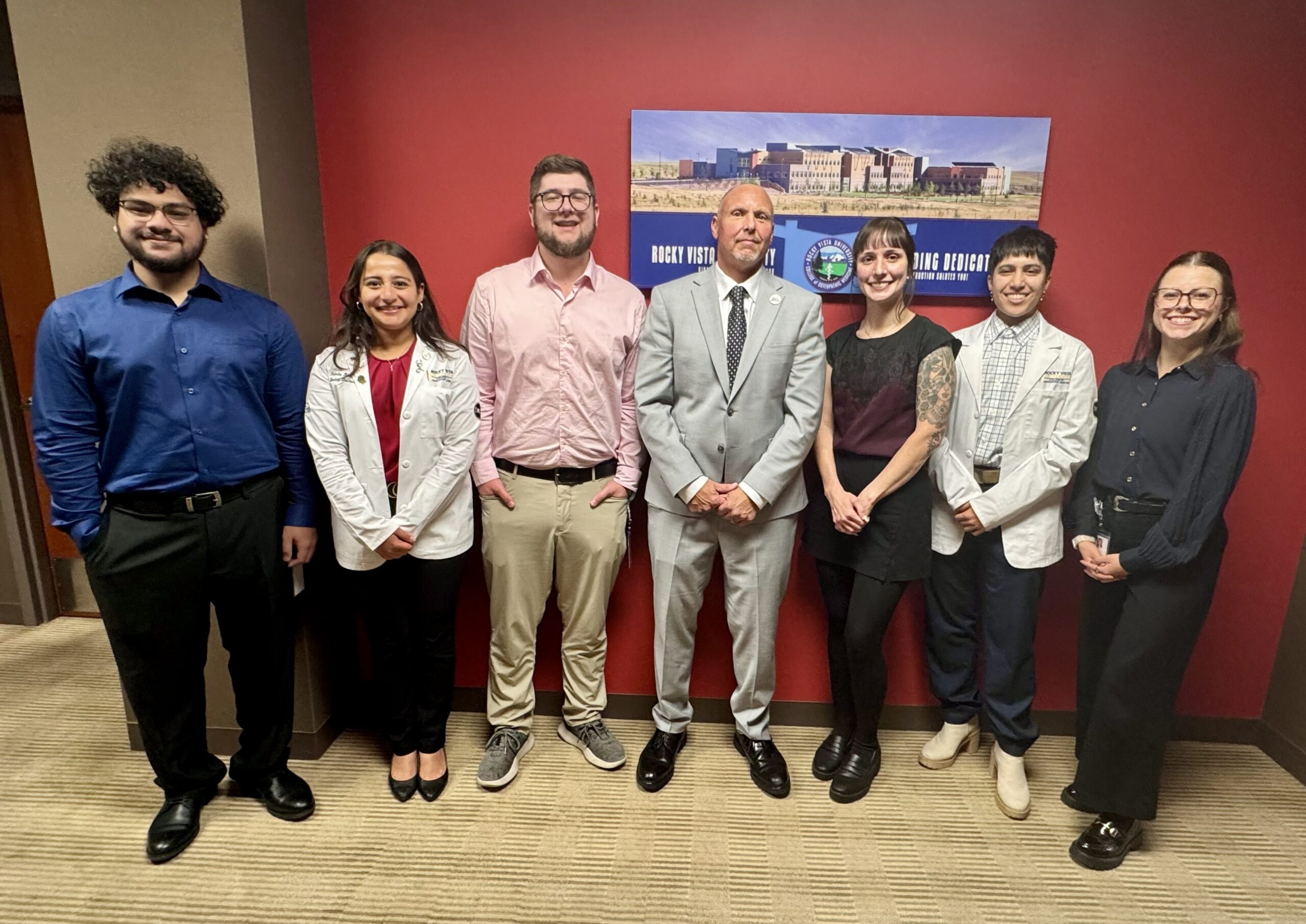
Rocky Vista University College of Osteopathic Medicine Colorado (RVUCOM-CO) Acting Dean Christopher LaFontano, DO joined students on AACOM Advocacy Day. He emphasized that the American Osteopathic Association and the American Medical Association have already acknowledged that both osteopathic and allopathic training prepare physicians at a comparable standard, LaFontano said.
“It is now time for residency directors to recognize that too, giving DO students a fair opportunity to match without requiring the USMLE,” Dr. LaFontano said.
According to the bill, the FAIR Act would ensure that Medicare-funded residency programs accept applications from DO students by requiring them to report yearly applicant and acceptance data for DO and MD candidates. It would also affirm that programs accept the COMLEX-USA exam.
But until this bill is passed, students like Joley Shah, a second-year student at RVUCOM-CO, worry about being accepted into their dream residency program. Shah would like to pursue a general surgery residency and shared her concerns with Colorado legislator staff members on Advocacy Day. According to AACOM, 85 percent of DO students applying for general surgery residencies experienced bias in the selection process.
Because of this bias, Shah feels pressure to take the USMLE exam in addition to the COMLEX-USA exam. She has also taken on more extracurricular activities while in medical school in hopes of being more competitive when applying to residency programs. Programs look at more than just a student’s academic achievements when considering them for residency placement; they often look at extracurricular activities, volunteer work, and other factors. All of this has made Shah feel burned out.
“I question a lot, even with the work that I do and the promise that I have, whether taking all of this on is going to make me more competitive against MD students anyway,” Shah said.
Advocating for Underserved Communities
Advita Bhatia believes that advocacy is part of being a physician. The RVUCOM-CO second-year student attended AACOM Advocacy Day not only to support bills that would impact her as a DO student, but also to exercise her obligation for advocacy.
“We have a responsibility not only to care for our patients, but also to advocate for policies that affect our education, our future careers, and our patients’ access to care,” Bhatia said.
The Community TEAMS Act aims to create a grant program that would bring more medical students to medically underserved communities by funding clinical rotations at rural health centers, according to the bill. This would help address physician workforce shortages, as medical students “who train in underserved areas are almost three times more likely to practice in underserved areas and four times more likely to practice primary care in those areas,” according to AACOM.
This bill is especially important to Bhatia, as her most meaningful experiences in healthcare have come from working with underserved communities both locally and abroad. More clinical rotations in rural areas would help students build compassion and learn how to navigate the unique challenges that underserved populations experience.
“Those experiences don’t just benefit students; they help us understand the patients we hope to serve and can inspire more physicians to ultimately practice in those communities,” Bhatia said.
A Physician’s Obligation to Advocacy
RVU students made their case during AACOM Advocacy Day, joining the more than 700 advocates from 74 osteopathic medical schools registered for the event. RVU students shared their personal stories and the importance of expanding rural training opportunities.
“Advocacy is both an important responsibility and a privilege. As community leaders, physicians are ideally positioned to call attention to issues affecting patients and healthcare,” said Rocky Vista University Montana College of Osteopathic Medicine Acting Dean Benjamin Wilde, DO. “On AACOM Advocacy Day, our students represented RVU exceptionally well, meeting with legislative staff to advocate for medical students, patients, and rural communities. Support for the FAIR Act and Community TEAMS Act would reduce barriers for osteopathic students, expand rural training opportunities, and strengthen Montana’s future physician workforce.”
RVU is committed to addressing healthcare provider shortages in the Mountain West region. Stay up to date on how RVU continues to advocate for osteopathic medicine students and the patients they serve by following us on social media.