
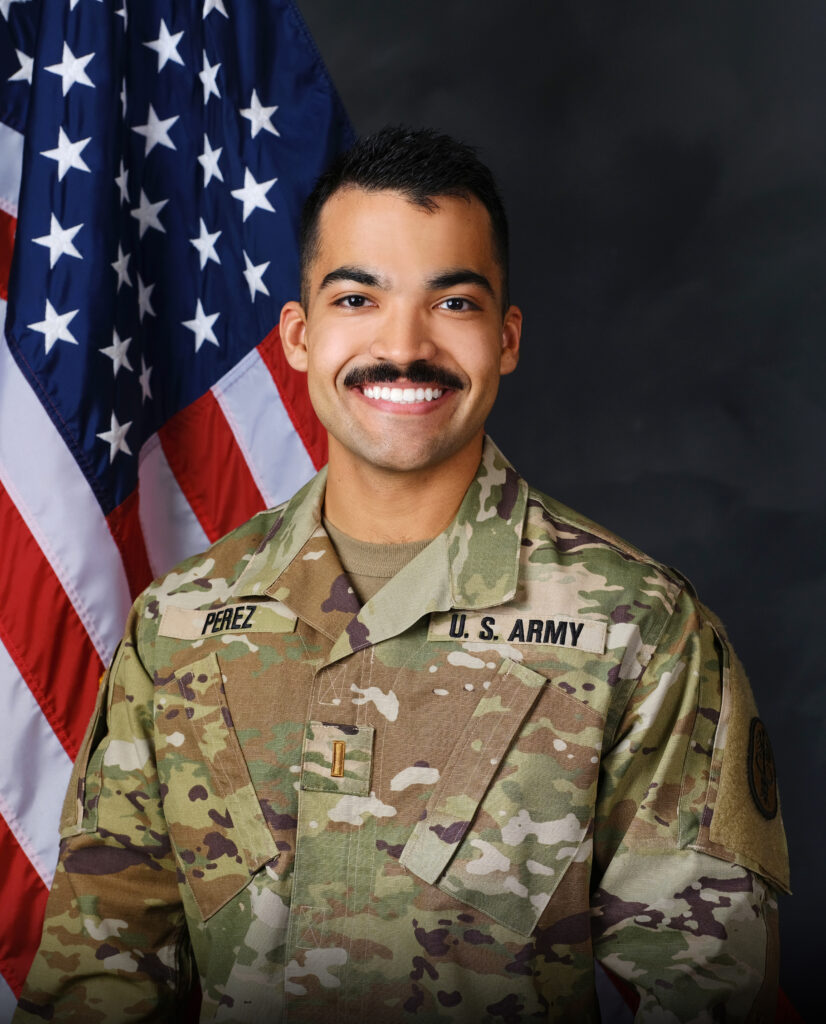
Growing up, Christopher Perez and his twin brother were Mariachi violinists, a detail that might seem far removed from a surgical residency, but one Chris sees as foundational to everything that followed. The discipline of learning an instrument, breaking down a skill piece by piece, and building it back up, is something he would later recognize in the operating room. “I found a lot of similarities between music and surgery,” he says. “The methodology of how you learn a skill set — that’s something unique to surgery that I didn’t really see in any other field.”
The road to medical school wasn’t a straight one. Chris struggled significantly during undergrad, coming close to failing out before spending two to three years rebuilding his academic record through an unofficial post-baccalaureate program. He applied to nearly 30 master’s programs before being accepted into Rocky Vista University Master of Science in Biomedical Sciences (MSBS) program, initially off the waitlist. Once there, he thrived, finishing in the top one to two percent of his class, delivering the commencement speech, and earning a partial scholarship.
“I think what kept me motivated was the satisfaction of finally getting it after struggling so much,” he reflects. “I was proud of myself for sticking to my guns.”
One thing that helped was how the MSBS program embedded master’s students within the medical student community. Chris found that the curriculum was 90 to 95 percent similar to what first-year med students were learning, which helped demystify the path ahead. “I could actually see myself doing what I was learning,” he says. “It was nice to get some immediate satisfaction with that.”
The required ultrasound curriculum was one aspect of his DO training that left a lasting impression. When Chris went on his fourth-year rotations and audition rotations in general surgery, he noticed that most medical students from other schools had never used an ultrasound. Chris, by contrast, was conducting FAST exams, Doppler studies, and abdominal exams with confidence, skills he now uses daily during his AEM rotation. “That was one of those full-circle moments where you think, ‘I’m glad I learned this,'” he says.
The second was RVU’s Ambassador Program, which Chris joined as a first-year student and continued for all four years of medical school. As the only military ambassador on his campus, he became a go-to resource for Health Professions Scholarship Program (HPSP) students navigating everything from training timelines to paperwork. “My mentorship with military medicine has deepened over the past four years, and I’m able to pay that forward,” he says. Just two days before the interview, he took a call from a fellow Army student weighing general surgery against emergency medicine.
Chris’s interest in surgery crystallized during his third-year rotations. What drew him in wasn’t just the procedures; it was the immediacy of impact. “One day I’ll be able to walk into a room and fix the issue within a couple of hours, see the patient outpatient a few days later, and know they’re doing better because of an incision I made,” he says. “My father-in-law, who is a sleep physician, always tells me that ‘to cut is to heal’.”
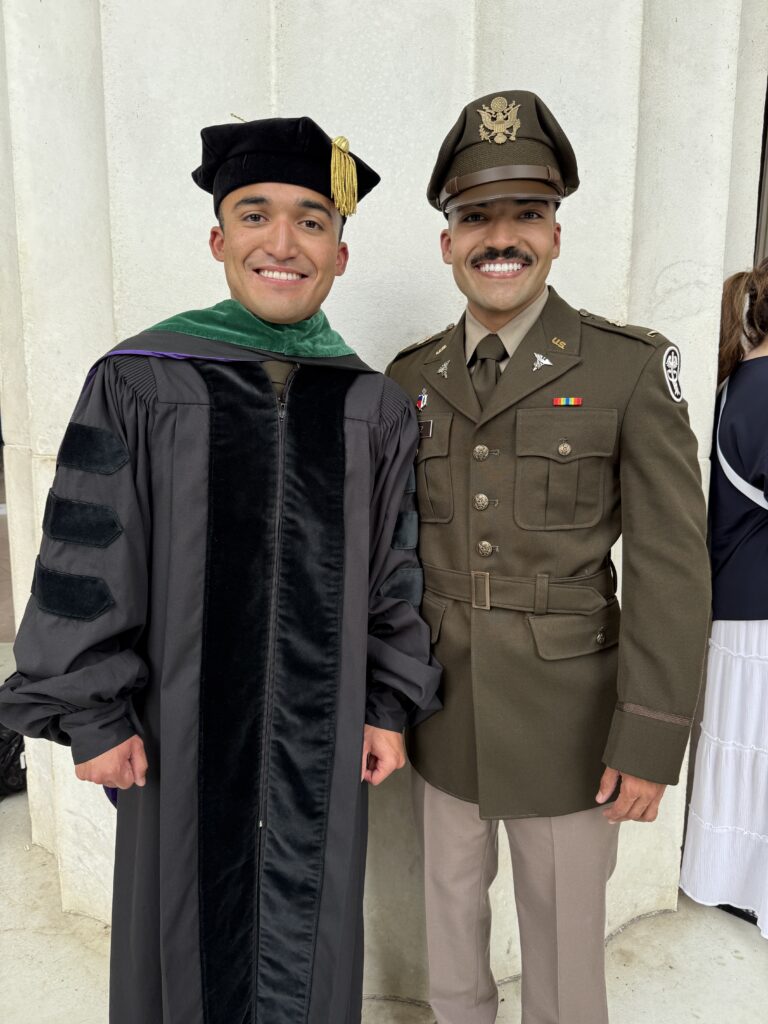
As an HPSP student in the Army, Chris matched into one of the military’s most competitive specialties in December. “With my history of self-doubt and imposter syndrome, and after everything I went through in undergrad, to have matched into a competitive program in a competitive specialty meant the world,” he says.
Now headed to El Paso for a five-year general surgery residency, Chris is also motivated by the communities he’ll serve. Half Mexican and half Puerto Rican, he is a native Spanish speaker who sees representation in medicine as a meaningful part of his calling. His twin brother matched into urology at UT Health in San Antonio, just a few hours away. Together, they have traveled parallel paths through medicine since scribing side by side in undergrad.
For prospective students considering RVU, Chris’s advice is rooted in his own winding journey: “Medicine is going to be what you make of it. A little bit of struggle is good for you sometimes. Be honest with yourself about your deficits, and keep growing. You’ll figure out what works for you.”