
RVU Students Host Community-Involved Mass Casualty Simulations on Montana and Utah Campuses
Rocky Vista University students on both the Montana and Utah campuses hosted community-involved mass casualty simulations recently, which aim to train medical students on how to respond and treat patients during high-stress emergency situations.
Montana
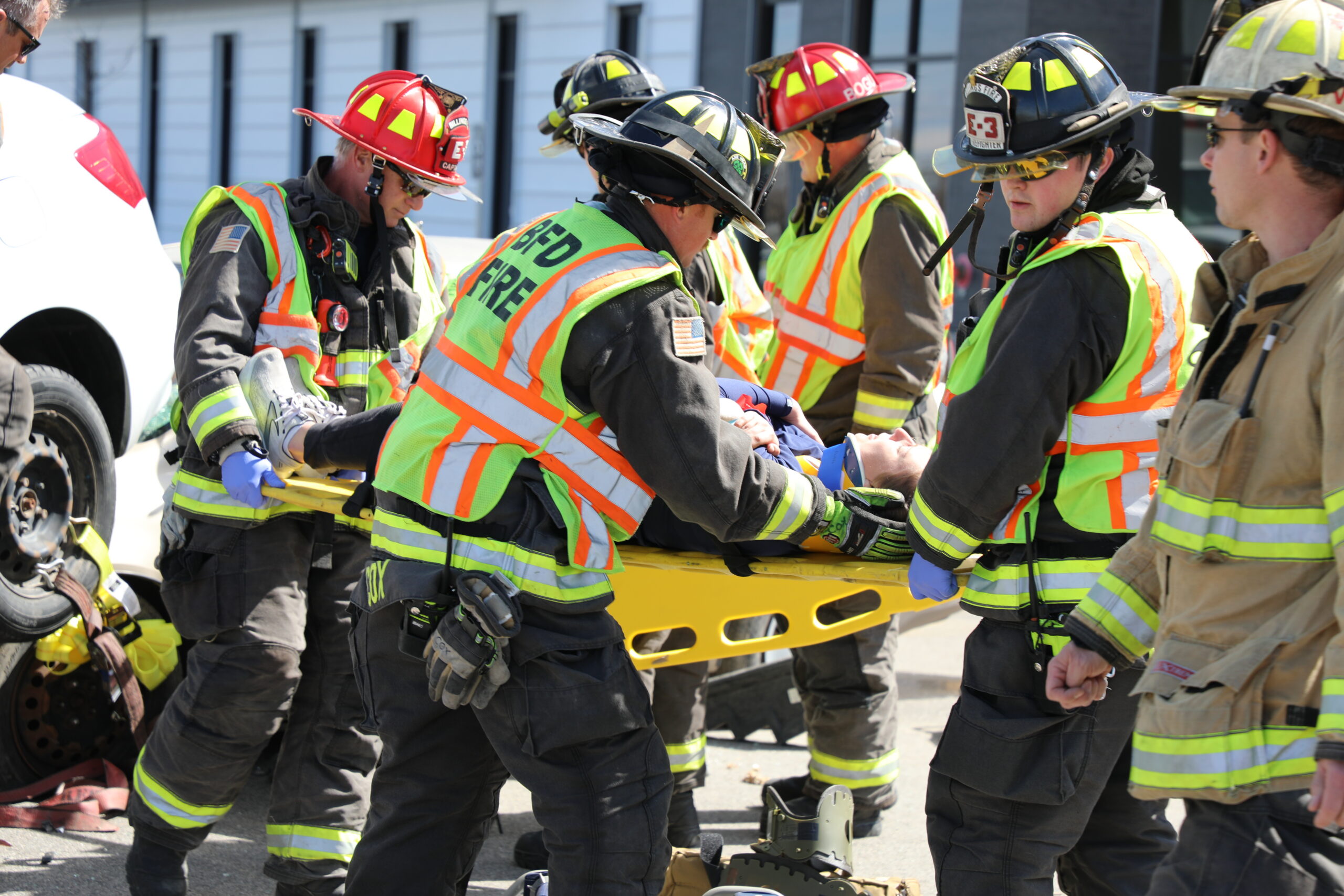
Rocky Vista University – Montana (RVU-MT) hosted its first community-involved Mass Casualty Simulation on April 4. Around 150 individuals participated, including RVU students, staff, and faculty; simulated patient contractors; the Billings Fire Department; and Montana State University Billings paramedic and nursing students. Riverstone Health and School District 2 Medical Careers students and staff also participated.
Cars donated by Hanser’s Automotive were set up on campus to simulate a car wreck with pedestrian injuries and deaths. There were two iterations, or rounds, of the simulation, where volunteers wore makeup to mimic specific injuries, like broken bones, scrapes and bruises, head injuries, crush injuries, and more. During these events, students learn how to prioritize patient care and how best to utilize time and resources, said Becky Anglin, DNP, RN, CHSE, Director of Simulation at RVU-MT.
“These events are large-scale and require [an] ‘all hands-on deck’ type of approach that can be challenging without proper training,” Dr. Anglin said.
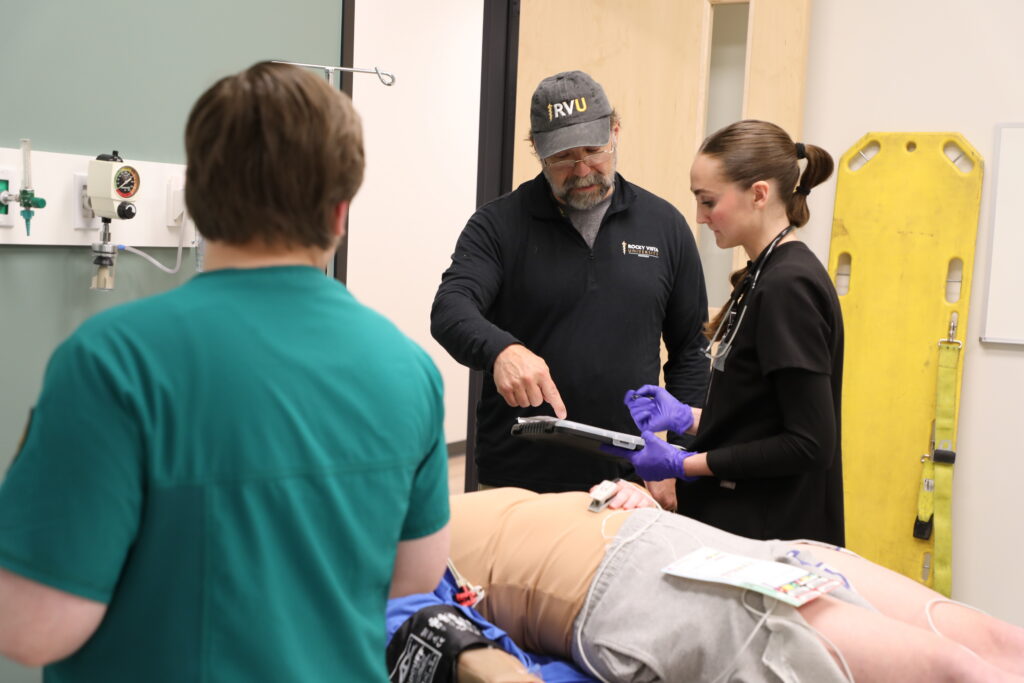
One of the goals of the simulation is to teach students how to work collaboratively with other healthcare professionals during high-stress emergencies. Billings Fire Department firefighters extracted patients from cars, who were then triaged by paramedic students. Those students then provided patient hand-off reports to nursing students and OMS-II osteopathic medicine students who provided in-hospital emergency room care using the campus simulation facility.
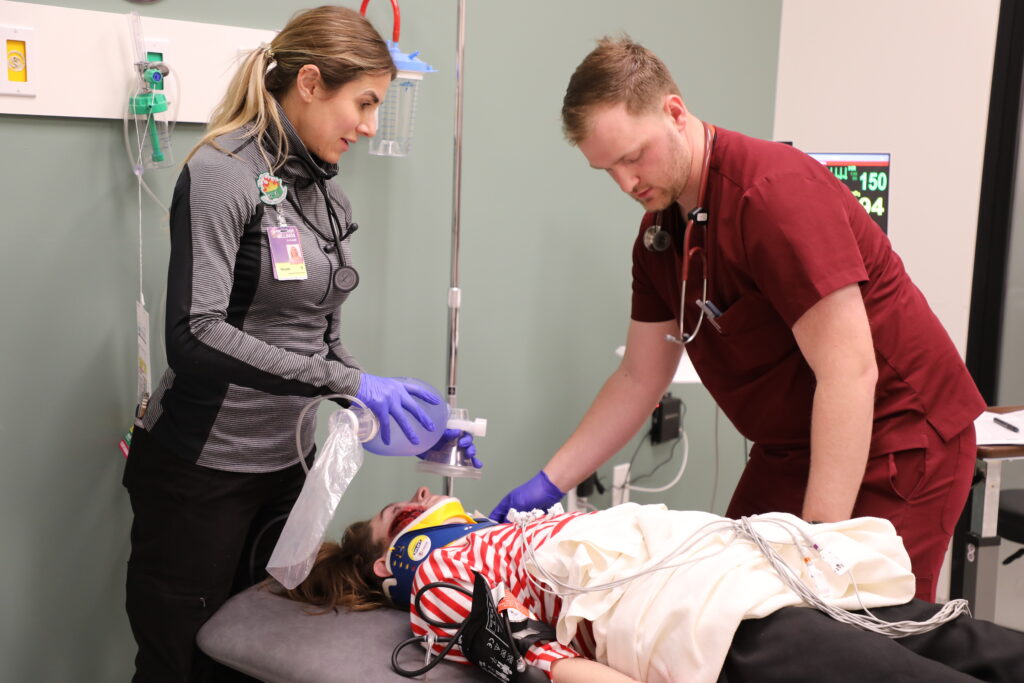
The simulation not only adheres to the RVU curriculum but also satisfies the Interprofessional Education requirement of the Commission on Osteopathic College Accreditation, or COCA. It also helps other participants involved to meet training requirements in their respective roles, Dr. Anglin said.
A Valuable Learning Experience for Everyone
Grace McDonald, OMS-II, acted as the triage zone lead during the simulation, the area where patients underwent preliminary medical assessment to determine their urgency for emergency treatment. She said she is fortunate to be a part of a medical school and community that values these training opportunities for students. Simulations like this help students apply their medical knowledge in real-world situations.
“I think they’re incredibly important,” she said. “I know a lot of people at different schools who don’t have these opportunities.”
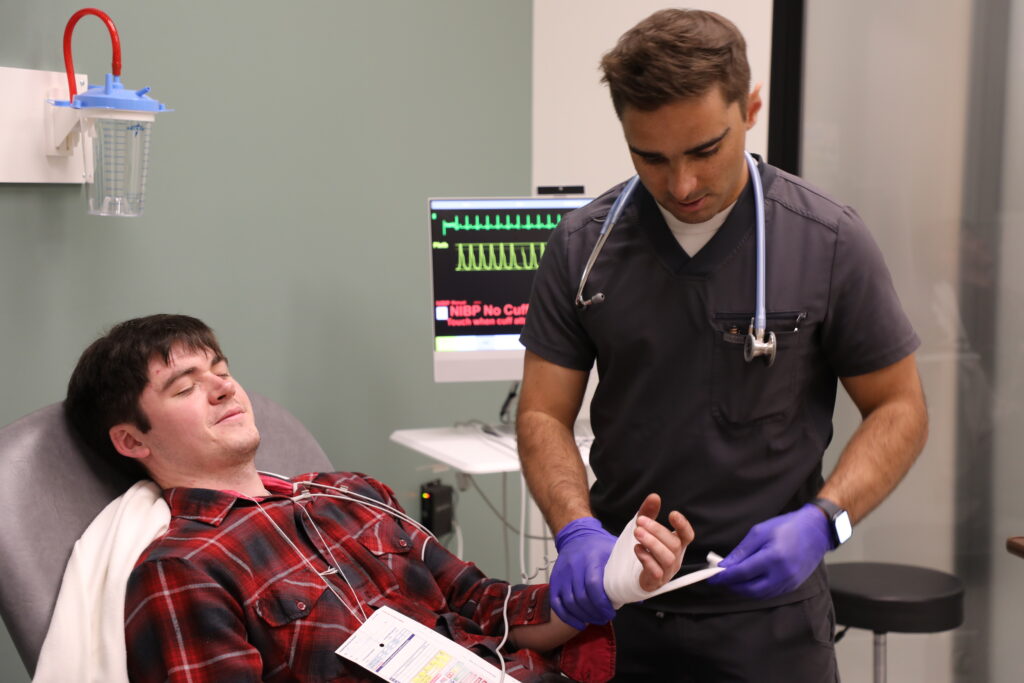
Peter Roland, OMS-I, participated as a patient during both iterations of the simulation, having had to receive treatment for a burned hand and an impalement injury. He’s participated in providing care during other, smaller-scale mass casualty simulations through the Military Medicine Track. He’s excited to act as a physician in next year’s community-involved event, but sees value in his role as an injured patient.
“I think it’s important to see both sides of it — both the patient and the provider,” he said. “I’ve really enjoyed being a patient for this. It just gives you a unique glimpse into what they’re going through and how they are probably feeling and acting. You don’t always put yourself in the head of the patient when you’re providing care.”
Preparing for Next Year
Preparing for the simulation was a months-long process involving RVU’s Office of Simulation in Medicine and Surgery (SIMS) and a group of student volunteers, Dr. Anglin said. Since October 2025, students have been working out the logistics of the simulation during lunch-and-learn sessions.
The plan is to hold a community-involved simulation every year, with greater community participation, so that future students can be part of this valuable learning experience.
“This was a huge undertaking, and everyone who came and volunteered their Saturday has been amazing,” Dr. Anglin said.
Utah
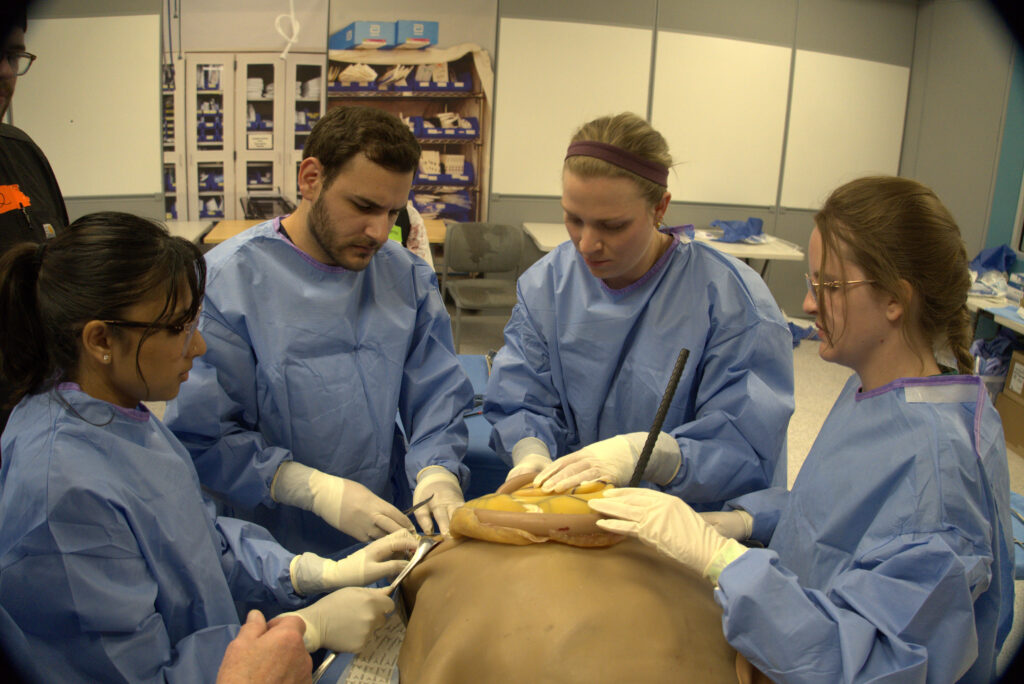
Rocky Vista University – Utah (RVU-UT) held its largest mass casualty simulation to date on March 21, with 250 participants. The event involved RVU students, staff, and faculty; Dammeron Valley Fire & Rescue; the Washington County Sheriff’s Department; EMT students with Dixie Technical College; the Community Emergency Response Team; simulated patient contractors; local high school students; and more.
Patients simulated injuries consistent with a double bombing, including blast injuries, burns, amputations, and others.
RVU-UT’s goal was to teach students how to triage, stabilize, and care for patients in high-stress environments while coordinating with other healthcare professionals.
A Tradition in Learning
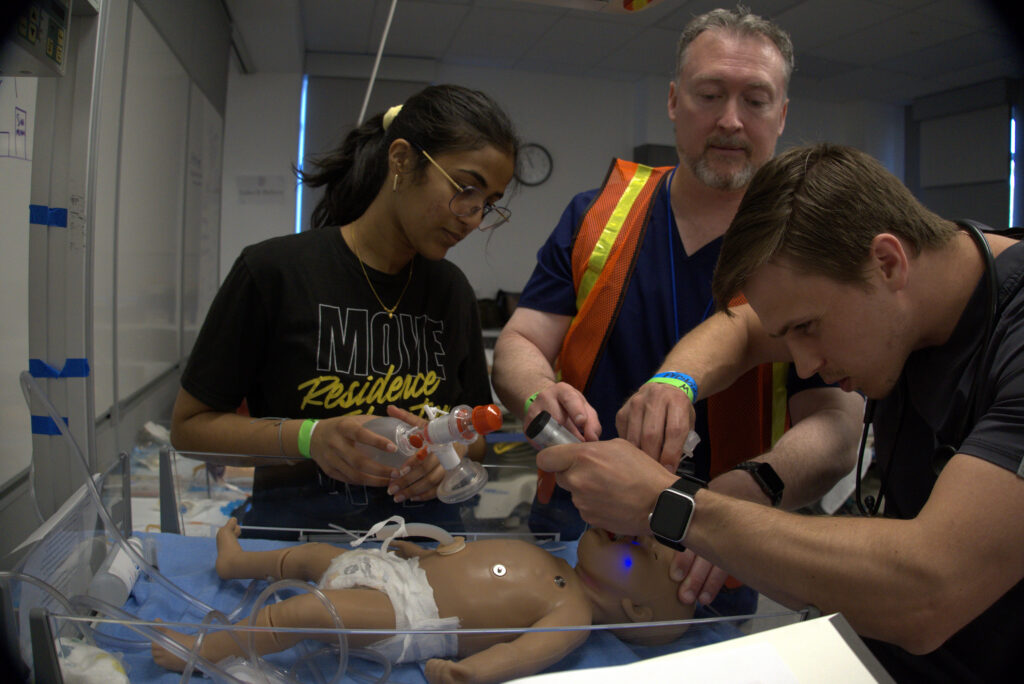
The Utah campus has held community-involved simulations for several years, and this simulation has seen increased student participation, strengthened partnerships, and an expanded range of complex trauma scenarios.
Samantha Williams, OMS-II, oversaw the simulation’s planning and execution as Student Doctor Coordinator. She’s been involved in the event over the last three years, first as a student in Rocky Vista University’s Master of Science in Biomedical Sciences (MSBS) program.
Williams found that playing different roles during the simulation over the years and seeing how it’s grown has been a unique experience. This year, she noticed that everyone has a different level of experience in situations like this, and that it creates opportunities to both learn and help others in real time.
“Being able to step back and observe at times also gave a different perspective, especially when things didn’t go as planned, which often turned into some of the best learning moments,” she said.
Filling in the Gaps
Williams hopes that everyone who participated walked away from the event having learned something meaningful, no matter their role. She’s especially grateful to have worked with a variety of healthcare professionals and first responders.
“Working with clinical providers from different backgrounds was also a huge part of the experience,” she said. “Each person brought their own approach to problem-solving, and being able to learn from that, even outside of emergency medicine, was really valuable.”
Samuel Majka, OMS-I, learned a valuable lesson from the simulation, saying that the stress from mass casualty events exposes gaps in one’s medical knowledge. No one can be fully prepared for events like this, but training helps.
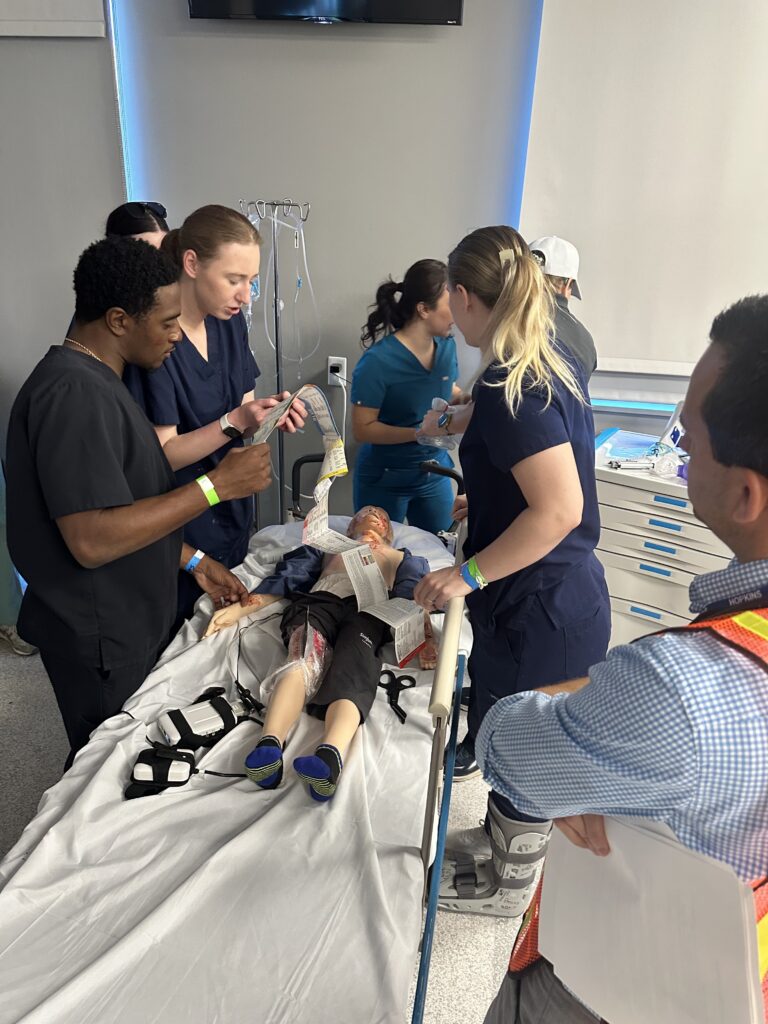
“No one is ever truly ready for the weight of a mass casualty event, and that reality is what drives us to keep learning and training so that when the worst happens, it can be just a little less devastating,” Majka said.
Learn more about RVU’s simulation facilities and its commitment to promoting hands-on learning.