
RVU Military Medicine Program holds Mass Casualty Simulation on Vail Mountain
Rocky Vista University Military Medicine Program students put their clinical skills to the test as they treated simulated patients at 10,000 feet on Colorado’s Vail Mountain in August.
Known for its ski resorts and hiking trails, Vail Mountain provides a unique environment for medical training. Nineteen Rocky Vista University College of Osteopathic Medicine (RVUCOM) students engaged in a mass casualty simulation located near the top of the Eagle’s Nest gondola. This is the first time the Military Medicine Program has held a simulated medical event in partnership with Vail Ski Patrol.
The immersion-based exercise is part of the program’s larger goal of preparing students for active-duty service and exposing them to scenarios they could encounter as military medical officers. Simulations like this, with inconsistent lighting, inclement weather, limited medical resources, and navigating challenging terrain, builds students’ clinical skills while in an austere environment, said RVU Military Medicine Specialist Frank Fidani who helped lead the exercise.
A Unique Simulation Experience
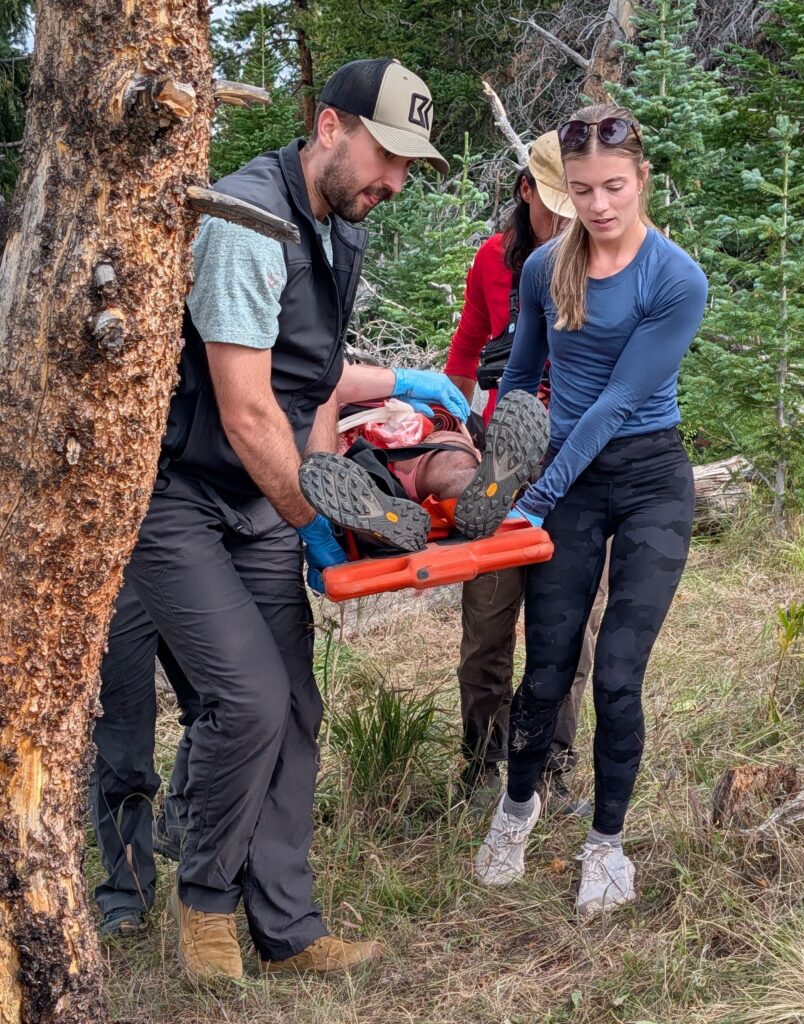
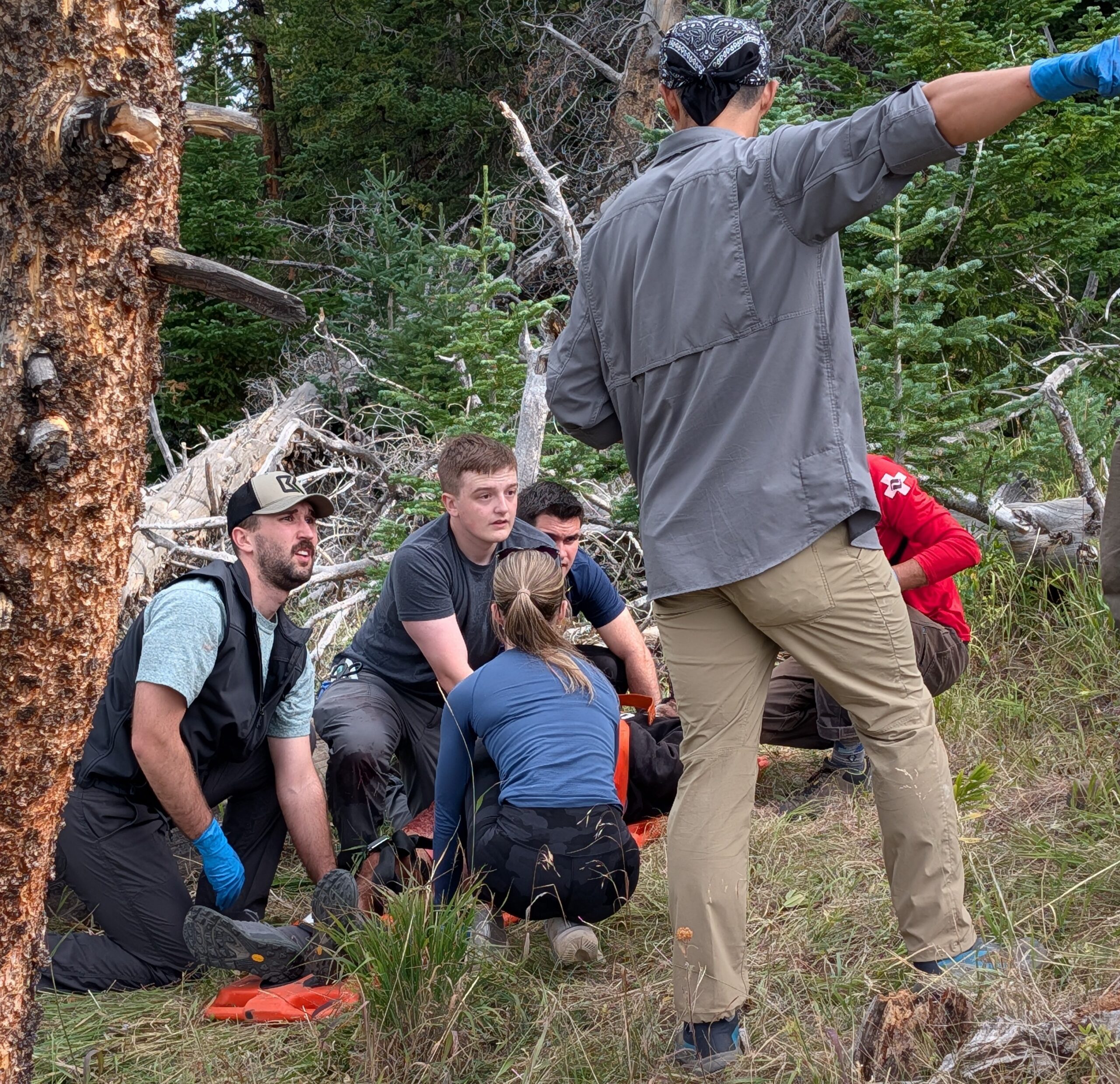
The training exercise required students to work with 26 Vail Ski Patrol members to treat 12 patients injured by a simulated propane tank explosion at a mountain-top campsite. Using equipment supplied by RVU’s Office of Simulation in Medicine and Surgery, patients consisted of mannequins and real people wearing makeup and Cut Suit sleeves to mock specific injuries.
Once students arrived on scene, they treated patients for blast wounds, limb fractures, arterial bleeds, and other injuries with guidance from Vail Ski Patrol. They performed first aid, wound packing, tourniquet and splint applications, and other hands-on medical interventions.
As a final activity, students had to plot multiple waypoint coordinates on a map and navigate three kilometers down the mountain using a compass, Fidani said. Upon arrival at the base of the mountain, students were presented with a final casualty simulation and had to collaborate with Vail first responders to stabilize patients and prepare them for simulated transport.
It was a valuable opportunity for students to work with other healthcare professionals and learn about first responder point-of-injury care, the process of transporting patients from a rural area to a hospital, and the importance of interprofessional teamwork and communication.
“The RVU military program is unique, rigorous, and focused on collaboration to prepare future military officers to provide healthcare to those that serve and civilian populations during time of crisis,” said Director of the Military Medicine Program, Dean Gubler, DO.
Hands-on, Real-world Training
RVU is a leader in providing students with immersive training experiences that help shape them into confident physicians ready for a variety of real-world situations. Learn more about how RVU prepares students on the Military Medicine Program page and the Office of SIMS page of the RVU website.